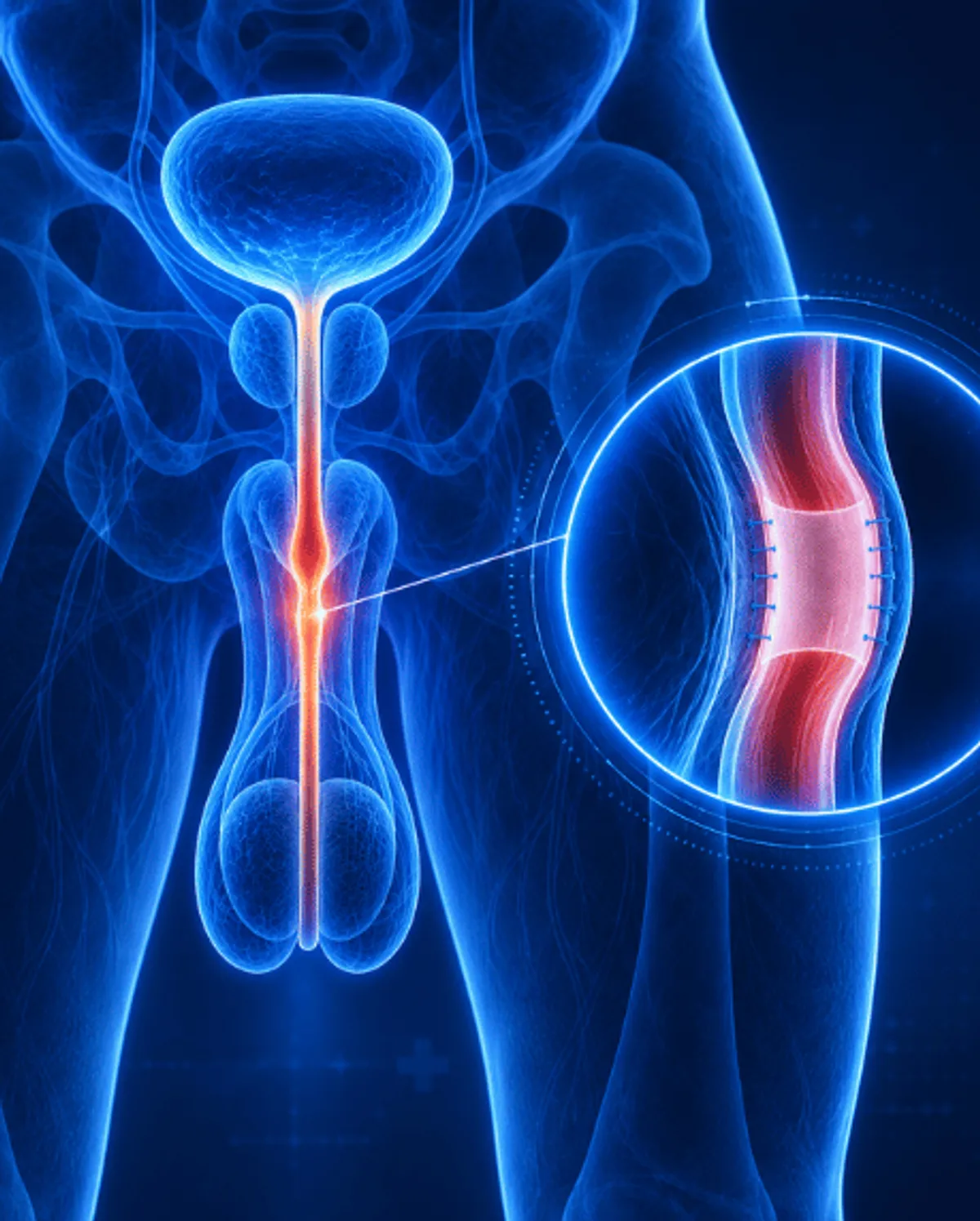
Diagnosis of a urethral stricture usually begins with a medical history and physical examination. The urologist may perform urine tests, uroflowmetry to measure urine flow, and imaging studies such as a retrograde urethrogram to determine the location and length of the narrowing. Cystoscopy may also be used to directly examine the urethra.
Treatment depends on the severity, location, and length of the stricture and whether it has returned after previous treatment. Less invasive options may include urethral dilation or direct visual internal urethrotomy (DVIU) in selected cases.
For longer, severe, or recurrent strictures, urethroplasty may provide a more definitive reconstructive approach. The surgeon may remove the scarred section and reconnect the healthy urethral ends or use a tissue graft to reconstruct the narrowed area.
Benefits of Urethral Reconstruction Surgery
Depending on the individual case, Urethral Reconstruction Surgery may help to:
Improve urine flow
Relieve difficulty and straining during urination
Reduce recurrent urinary tract infections
Improve bladder emptying
Reduce the risk of urinary retention
Restore normal urethral function
Address recurrent or complex urethral strictures
Recovery After Urethral Reconstruction Surgery
Recovery after Urethral Reconstruction Surgery varies depending on the type and extent of reconstruction. A urinary catheter is commonly left in place temporarily to allow the urethra to heal properly. The surgeon will determine when it can be safely removed, often after a follow-up assessment.
Patients may need to limit strenuous physical activity for a period after surgery and attend follow-up appointments to monitor healing and urinary function. The exact recovery period varies from patient to patient.
Is Urethral Reconstruction Surgery Suitable for Everyone?
Not every patient with a urethral stricture requires reconstructive surgery. The most appropriate treatment depends on the location, length, severity, and recurrence of the stricture, as well as previous procedures and the patient's overall health.
A specialized urological evaluation is essential to determine whether urethroplasty, endoscopic treatment, dilation, or another approach is most appropriate.