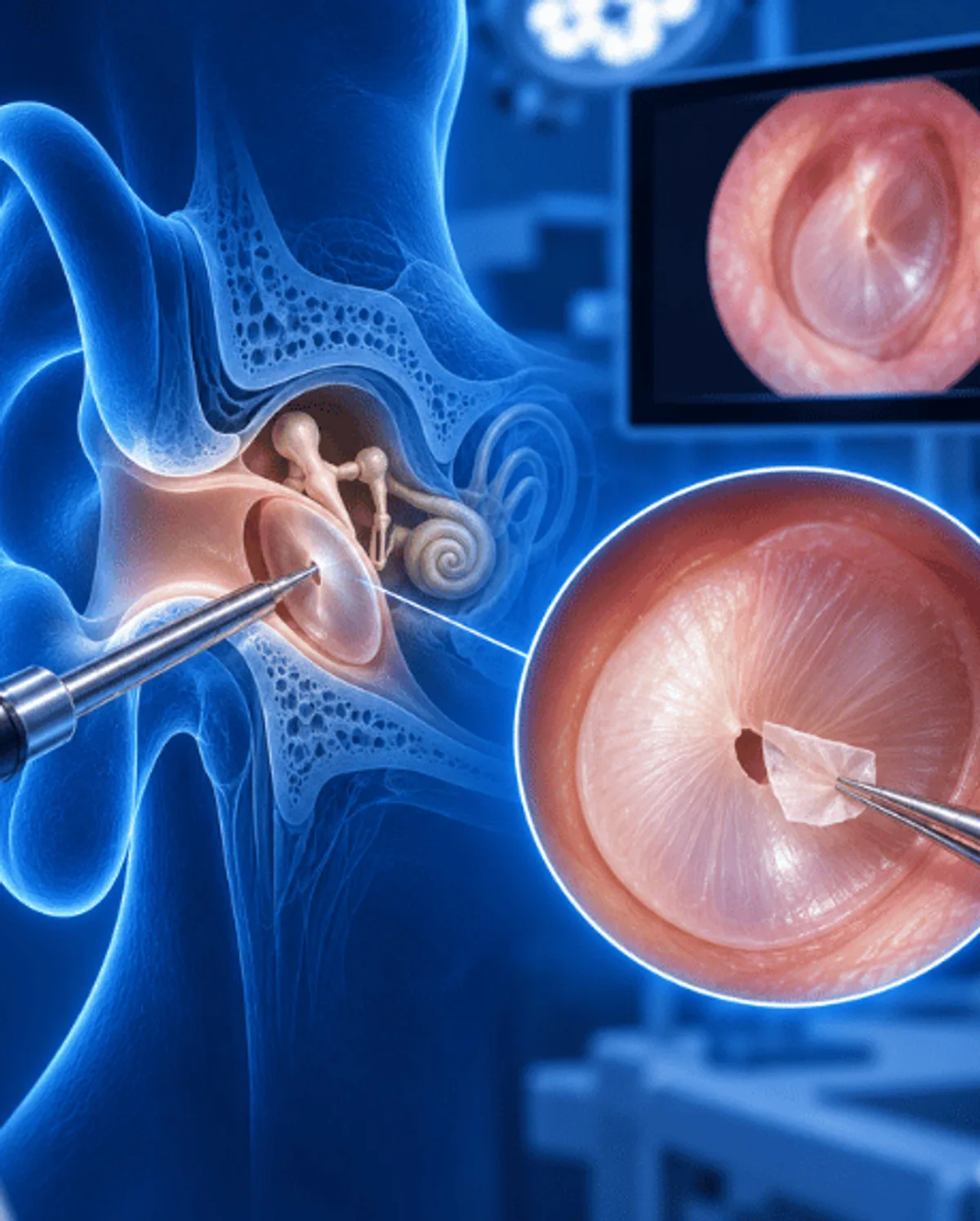
Diagnosis of a perforated eardrum usually begins with an examination of the ear using an otoscope or microscope. The doctor may also recommend a hearing test (audiometry) to assess the extent of hearing loss. Additional imaging or tests may be required when there are concerns about middle-ear damage or other complications.
Some small eardrum perforations may heal naturally with appropriate medical care. However, Tympanoplasty may be recommended when the perforation does not heal, causes recurrent infections, results in persistent drainage, or contributes to hearing problems.
During eardrum repair surgery, the surgeon closes the perforation using a tissue graft or another suitable material. The graft is positioned to allow the eardrum to heal properly. If necessary, additional procedures may be performed to treat damage within the middle ear.
Benefits of Tympanoplasty
Depending on the underlying condition, Tympanoplasty may help to:
Close a persistent eardrum perforation
Reduce recurrent ear infections
Prevent water and bacteria from entering the middle ear
Improve or stabilize hearing in suitable cases
Reduce persistent ear drainage
Protect the middle ear from further damage
Recovery After Eardrum Repair Surgery
Recovery after Tympanoplasty varies depending on the size of the perforation, the surgical technique, and whether other middle-ear procedures are performed. Patients may experience temporary ear discomfort, a feeling of fullness, or changes in hearing during the healing period.
The eardrum and graft may require several weeks to heal fully, and hearing improvement may take additional time. Patients should follow their surgeon's instructions regarding keeping the ear dry, medications, physical activity, and follow-up examinations.
Is Tympanoplasty Suitable for Everyone?
Tympanoplasty is not necessary for every eardrum perforation. The decision to perform Eardrum Repair Surgery depends on the cause, duration, size and location of the perforation, hearing status, presence of infection, and overall ear health.
A specialist ENT evaluation is essential to determine whether tympanoplasty, medical treatment, observation, or another ear procedure is the most appropriate option.