
Prof. Dr. Hossam El-Foll
Oncology
Professor – Consultant of Surgical Oncology – Menoufia University
New Cairo - Cairo
Cairo International Airport
about 12 km away
Dr. Hossam El Fol – Professor and Consultant of Surgical Oncology
Dr. Hossam El Fol is a Professor and Consultant specializing in Surgical Oncology, with extensive experience in the surgical management of complex cancers, particularly head and neck tumors, oral and maxillofacial tumors, breast cancer, gastrointestinal cancers, colorectal cancer, gastric cancer, liver tumors, pancreatic tumors, and pelvic malignancies.
Dr. Hossam El Fol has significant experience in planning complex cancer surgery with the aim of achieving appropriate tumor removal while preserving organ function, healthy tissue, and quality of life whenever possible.
His expertise also includes reconstructive procedures after tumor resection, particularly in selected head and neck and maxillofacial cancer cases.
Through Macrocare, patients can submit medical reports, imaging studies, biopsy results, and pathology reports for case review and appointment coordination with Dr. Hossam El Fol.
Dr. Hossam El Fol’s Specialties
The expertise of Dr. Hossam El Fol in Surgical Oncology includes:
- Head and neck cancer surgery.
- Oral cancer surgery.
- Tongue cancer surgery.
- Maxillofacial tumor surgery.
- Salivary gland tumor surgery.
- Neck tumor surgery.
- Cervical lymph node surgery.
- Neck Dissection.
- Reconstruction after head and neck tumor resection.
- Breast cancer surgery.
- Breast-conserving surgery.
- Mastectomy.
- Axillary lymph node surgery.
- Gastric cancer surgery.
- Colon cancer surgery.
- Rectal cancer surgery.
- Liver tumor surgery.
- Pancreatic cancer surgery.
- Gastrointestinal cancer surgery.
- Pelvic oncology surgery.
- Complex cancer surgery.
- Evaluation of recurrent tumors.
- Assessment of tumor resectability.
- Multidisciplinary cancer care through MDT planning.
Head and Neck Cancer Surgery with Dr. Hossam El Fol
Head and Neck Cancer Surgery is one of the most technically demanding areas of surgical oncology because the region contains structures responsible for breathing, speech, swallowing, chewing, facial movement, and appearance.
The expertise of Dr. Hossam El Fol includes the evaluation and surgical treatment of head and neck tumors, with careful planning to achieve cancer control while preserving important functions whenever possible.
Some patients may also require reconstructive surgery after tumor removal, particularly when the operation involves the mouth, jaw, tongue, or surrounding soft tissues.
What Are Head and Neck Cancers?
Head and neck cancers may arise in areas such as:
- Mouth.
- Tongue.
- Jaw.
- Throat.
- Pharynx.
- Larynx.
- Salivary glands.
- Neck.
- Cervical lymph nodes.
- Selected facial structures.
Treatment depends on the exact tumor site, pathology, stage, and extent of disease.
Symptoms of Head and Neck Cancer
Possible symptoms include:
- A neck lump.
- A mouth ulcer that does not heal.
- A persistent oral mass.
- Difficulty swallowing.
- Pain while swallowing.
- Persistent hoarseness.
- Changes in speech.
- Unexplained oral bleeding.
- Jaw swelling.
- Unexplained weight loss.
- Enlarged lymph nodes in the neck.
These symptoms do not necessarily indicate cancer, but persistent symptoms should be medically evaluated.
Oral and Tongue Cancer Surgery with Dr. Hossam El Fol
Oral Cancer and Tongue Cancer require careful surgical planning because of their close relationship to the muscles and nerves involved in speech and swallowing.
Surgery may include:
- Tumor resection.
- Partial tongue resection in selected cases.
- Removal of surrounding affected tissue.
- Assessment or removal of cervical lymph nodes.
- Reconstruction when required.
The extent of surgery depends on the size, location, depth, and stage of the tumor.
Jaw and Maxillofacial Tumors
Maxillofacial tumors may require collaboration between multiple surgical specialties.
Treatment can include:
- Tumor resection.
- Partial jaw removal in selected cases.
- Cervical lymph node assessment.
- Jaw or soft-tissue reconstruction.
- Postoperative rehabilitation.
Dr. Hossam El Fol has experience in complex oncologic procedures involving the face, jaw, head, and neck.
Neck Dissection for Head and Neck Cancer
Certain head and neck cancers can spread to the lymph nodes of the neck.
In appropriate cases, Neck Dissection may be performed to remove specific lymph node groups.
The extent of surgery depends on:
- Primary tumor type.
- Primary tumor location.
- Presence of enlarged lymph nodes.
- CT, MRI, or PET/CT findings.
- Biopsy results.
- Cancer stage.
Facial and Jaw Reconstruction After Cancer Surgery
In selected head and neck cancer procedures, tumor removal may result in loss of bone, muscle, skin, or other soft tissue.
Reconstructive Surgery may therefore be required using techniques such as:
- Muscle flaps.
- Skin and soft-tissue flaps.
- Tissue transferred from another part of the body.
- Jaw reconstruction techniques.
- Collaboration with reconstructive and maxillofacial surgeons.
The objective is to restore function and appearance as much as clinically possible after cancer resection.
Salivary Gland Tumors
Tumors may develop in:
- Parotid gland.
- Submandibular gland.
- Minor salivary glands.
Surgery in this area requires detailed planning because some salivary glands are located close to important nerves, particularly the facial nerve.
Treatment depends on tumor type, location, pathology, and extent.
Breast Cancer Surgery with Dr. Hossam El Fol
The expertise of Dr. Hossam El Fol includes the surgical management of Breast Cancer as part of a multidisciplinary cancer treatment plan.
Not every patient requires the same operation.
The surgical decision depends on:
- Tumor size.
- Tumor location.
- Breast size.
- Presence of multiple lesions.
- Lymph node status.
- Cancer stage.
- Response to treatment before surgery.
- Tumor biology.
Breast-Conserving Surgery
In selected patients, Breast-Conserving Surgery or Lumpectomy can remove the tumor with an appropriate margin while preserving most of the breast.
Radiotherapy is often part of the treatment plan following breast-conserving surgery when clinically indicated.
Mastectomy
Some patients require Mastectomy.
The decision may depend on:
- Tumor size.
- Multiple tumor areas.
- Tumor location.
- Tumor-to-breast size ratio.
- Previous treatment.
- Certain risk factors.
- Patient preference after discussion of available options.
Lymph Node Surgery in Breast Cancer
Assessment of the axillary lymph nodes is an important part of treatment for many breast cancer patients.
Procedures may include:
- Sentinel Lymph Node Biopsy.
- Axillary Lymph Node Dissection in selected cases.
Lymph node findings help determine cancer stage and subsequent treatment.
Gastrointestinal Cancer Surgery with Dr. Hossam El Fol
The expertise of Dr. Hossam El Fol includes the surgical management of several Gastrointestinal Cancers.
These include:
- Gastric cancer.
- Colon cancer.
- Rectal cancer.
- Liver tumors.
- Pancreatic tumors.
- Selected other gastrointestinal malignancies.
The role of surgery is determined after assessing cancer stage, tumor resectability, and the expected benefit of surgical treatment.
Gastric Cancer
Gastric Cancer may be treated surgically when the tumor is considered resectable.
Surgery may include:
- Partial gastrectomy.
- Total gastrectomy in selected cases.
- Removal of regional lymph nodes.
- Reconstruction of gastrointestinal continuity.
The operation depends on tumor location, size, and extent.
Symptoms of Gastric Cancer
Possible symptoms include:
- Loss of appetite.
- Weight loss.
- Upper abdominal pain or discomfort.
- Early satiety.
- Vomiting.
- Anemia.
- Gastrointestinal bleeding in some patients.
Diagnosis usually requires endoscopy, biopsy, and staging imaging.
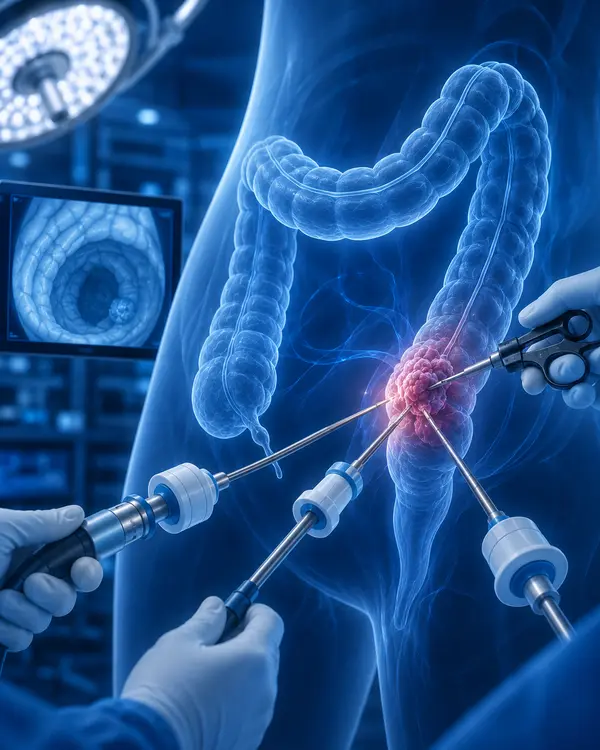
Colon Cancer Surgery with Dr. Hossam El Fol
Dr. Hossam El Fol evaluates and surgically treats Colon Cancer when resection is appropriate.
In resectable cases, surgery usually aims to remove:
- The affected segment of colon.
- An appropriate margin of healthy tissue.
- Regional lymph nodes.
The need for additional treatment is determined after pathology review and final staging.
Symptoms of Colon Cancer
Possible symptoms include:
- Persistent change in bowel habits.
- Persistent constipation or diarrhea.
- Blood in the stool.
- Unexplained weight loss.
- Anemia.
- Abdominal pain.
- Abdominal distension or bowel obstruction in advanced cases.
Colon cancer may also be detected during screening before symptoms develop.
Rectal Cancer
Rectal Cancer differs from colon cancer in several aspects of treatment.
Management may include:
- Pelvic MRI.
- Chemotherapy and radiotherapy before surgery in selected cases.
- Surgery.
- Additional postoperative treatment when indicated.
The surgical approach depends on the tumor’s distance from the anal sphincter and its relationship to surrounding pelvic structures.
Can the Anal Sphincter Be Preserved in Rectal Cancer?
In selected patients, the tumor can be removed while preserving the natural anus and sphincter function.
In other cases, this may not be possible because of the tumor’s location or involvement of the sphincter muscles.
The decision depends on:
- Tumor location.
- Tumor size.
- Response to preoperative treatment.
- Pelvic anatomy.
- Ability to achieve an adequate surgical margin.
Liver Tumors with Dr. Hossam El Fol
Tumors in the liver may represent:
- Primary liver cancer.
- Metastatic cancer that has spread from another organ.
Liver Resection may be an option in selected patients with resectable disease.
The decision depends on:
- Number of tumors.
- Tumor size.
- Tumor location.
- Relationship to major blood vessels.
- Remaining healthy liver volume.
- Liver function.
- Presence of disease outside the liver.
Partial Liver Resection for Cancer
In selected cases, Partial Hepatectomy may be performed to remove the part of the liver containing the tumor while preserving enough healthy liver tissue.
Not every liver tumor is suitable for surgery, so detailed imaging and liver function assessment are required.
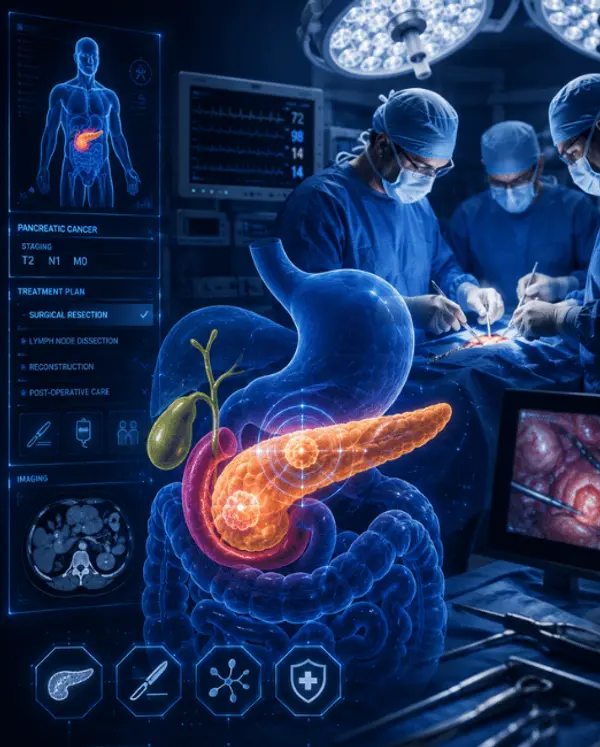
Pancreatic Cancer Surgery with Dr. Hossam El Fol
Pancreatic Cancer Surgery is among the most complex procedures in surgical oncology.
Before surgery, one of the most important questions is whether the tumor is:
- Resectable.
- Borderline resectable.
- Involving major blood vessels.
- Metastatic.
- Better treated first with systemic therapy.
These cases often benefit from multidisciplinary review.
Whipple Procedure for Pancreatic Cancer
For selected resectable tumors of the pancreatic head, Whipple Procedure – Pancreaticoduodenectomy may be considered.
This is a major operation that involves removal of structures around the pancreatic head followed by reconstruction of the gastrointestinal tract.
The decision is made after detailed imaging review and assessment of surgical resectability.
Is Every Pancreatic Cancer Operable?
No.
Operability depends on:
- Extent of disease.
- Relationship to major arteries and veins.
- Presence of metastases.
- Patient fitness.
- Response to treatment in selected cases.
Some patients may receive chemotherapy before being reassessed for surgery.
Pelvic Oncology Surgery
Pelvic Oncology Surgery can be complex because multiple organs, blood vessels, and nerves are located within a relatively small anatomical space.
Pelvic tumors may involve:
- Rectum.
- Colon.
- Reproductive organs.
- Urinary bladder.
- Soft tissues.
- Multiple adjacent structures.
Selected cases may require a multidisciplinary surgical team.
Locally Advanced Pelvic Tumors
Some pelvic tumors invade neighboring organs.
In selected patients, extended surgery may be considered when complete tumor removal is technically feasible and expected to provide meaningful clinical benefit.
The decision depends on:
- Cancer stage.
- Presence of distant metastases.
- Organs involved.
- Possibility of complete resection.
- Patient’s general condition.
Skull Base Tumors
Skull Base Tumors require careful evaluation because they may be close to major nerves, blood vessels, and critical neurological structures.
Selected cases may require collaboration between:
- Surgical oncology.
- Neurosurgery.
- ENT surgery.
- Maxillofacial surgery.
- Other specialties.
Treatment depends on tumor type, location, and extent.
Recurrent Cancer After Previous Treatment
Cancer may recur after surgery, chemotherapy, radiotherapy, or a combination of treatments.
Recurrent Cancer does not automatically mean surgery is impossible.
The assessment includes:
- Site of recurrence.
- Previous treatments.
- Time since previous treatment.
- Presence of distant disease.
- Technical resectability.
- Expected functional impact.
- Patient’s overall condition.
In selected cases, repeat surgery may still play a role.
Cancer Surgery After Chemotherapy or Radiotherapy
Some patients undergo surgery after receiving Neoadjuvant Treatment.
Before surgery, the team evaluates:
- Tumor response.
- Current tumor size.
- Relationship to surrounding structures.
- Development of any new metastatic disease.
- Possibility of achieving an adequate surgical margin.
Preoperative treatment may make some tumors more suitable for resection.
Does Every Cancer Need Surgery?
No.
Cancer treatment depends on tumor type, stage, biology, and location.
Treatment may include:
- Surgery.
- Chemotherapy.
- Radiotherapy.
- Targeted therapy.
- Immunotherapy.
- Hormonal therapy.
- A combination of treatments.
Surgery may be the first treatment, may follow another treatment, or may not be appropriate in some patients.
Tumor Resectability Assessment
One of the most important questions in surgical oncology is:
Can the tumor be removed surgically?
The answer depends on:
- Tumor location.
- Tumor size.
- Extent of disease.
- Relationship to major blood vessels.
- Involvement of surrounding organs.
- Presence of distant metastases.
- Patient fitness.
- Cancer biology.
- Response to previous treatment.
Dr. Hossam El Fol reviews pathology and imaging to determine the role of surgery within the overall treatment plan.
What Does Unresectable Cancer Mean?
A tumor may be described as unresectable when it cannot currently be removed safely or completely with an acceptable surgical outcome.
However, unresectable does not always mean permanently inoperable.
In some cancers, systemic therapy or radiotherapy may be given first, followed by reassessment to determine whether surgery has become possible.
Second Surgical Opinion for Cancer
For complex cancer cases, obtaining a Second Surgical Opinion may be useful before making a major treatment decision.
This may be particularly valuable before:
- Removal of an entire organ.
- Extensive cancer surgery.
- Accepting a diagnosis of unresectable disease.
- Repeat surgery after previous cancer treatment.
- Surgery close to critical anatomical structures.
A second opinion can help clarify whether alternative surgical strategies exist.
Multidisciplinary Cancer Team – MDT
Modern cancer treatment is usually based on a Multidisciplinary Team, MDT, rather than the decision of one physician alone.
The team may include:
- Surgical oncologist.
- Medical oncologist.
- Radiation oncologist.
- Diagnostic radiologist.
- Pathologist.
- Other surgeons depending on tumor location.
- Nutrition and rehabilitation specialists when needed.
This approach helps determine the most appropriate sequence of treatment.
Importance of Pathology in Cancer Treatment
The Pathology Report is one of the most important documents in a cancer patient’s medical file.
It may identify:
- Tumor type.
- Tumor grade.
- Cellular characteristics.
- Biomarkers.
- Features that influence treatment.
In complex cases, pathology slides and blocks may sometimes benefit from expert review before a major treatment decision.
Biopsy Before Cancer Surgery
Most suspected cancers require confirmation with a Biopsy before definitive treatment.
The type and route of biopsy vary depending on tumor location.
For certain complex tumors, biopsy planning should be carefully coordinated so that it does not interfere with future surgery.
Cancer Staging
Cancer Staging determines how far the disease has spread.
Investigations may include:
- CT.
- MRI.
- PET/CT.
- Ultrasound.
- Endoscopy.
- Bone scan in selected cancers.
- Other tumor-specific studies.
Staging helps determine whether surgery, systemic therapy, radiotherapy, or another treatment should come first.
Treatment Before Cancer Surgery
Treatment given before surgery is called Neoadjuvant Therapy.
It may include:
- Chemotherapy.
- Radiotherapy.
- Chemoradiotherapy.
- Targeted therapy in selected cancers.
Possible goals include:
- Reducing tumor size.
- Increasing the likelihood of resection.
- Treating microscopic disease early.
- Improving the possibility of organ preservation.
Treatment After Cancer Surgery
After tumor removal, the surgical specimen is examined to establish final pathological staging.
Depending on the results, patients may require:
- Chemotherapy.
- Radiotherapy.
- Hormonal therapy.
- Targeted therapy.
- Immunotherapy.
- Surveillance only.
The decision depends on tumor type, stage, pathology, and molecular features.
Surgical Margins in Cancer Surgery
One objective of cancer surgery is to remove the tumor with an appropriate Surgical Margin of surrounding tissue when clinically possible.
After surgery, the pathologist examines the specimen margins to determine whether tumor cells extend to the edge of the removed tissue.
Margin status may influence the need for additional treatment.
Follow-Up After Cancer Surgery
Cancer treatment does not end when surgery is completed.
Follow-up may include:
- Clinical examinations.
- Periodic imaging.
- Laboratory investigations.
- Follow-up of additional cancer treatment.
- Nutritional assessment.
- Rehabilitation.
- Evaluation of any new symptoms.
The follow-up schedule depends on tumor type and stage.
Dr. Hossam El Fol’s Treatment Approach
Dr. Hossam El Fol evaluates each cancer case individually.
His approach includes:
- Reviewing the diagnosis.
- Reviewing pathology.
- Reviewing imaging.
- Establishing cancer stage.
- Assessing surgical resectability.
- Determining the appropriate timing of surgery.
- Selecting the appropriate extent of resection.
- Preserving organ function whenever possible.
- Coordinating with other oncology specialties.
- Planning postoperative follow-up.
Dr. Hossam El Fol’s Clinical Experience
Dr. Hossam El Fol is a Professor and Consultant of Surgical Oncology with a long academic and clinical career in cancer surgery.
His experience is particularly focused on complex oncologic surgery, head and neck and maxillofacial cancers, breast cancer, gastrointestinal cancers, and pelvic malignancies.
Why Do Patients Consult Dr. Hossam El Fol?
Patients may seek an evaluation with Dr. Hossam El Fol for specialized management of:
Surgical oncology – head and neck cancer surgery – oral cancer surgery – tongue cancer surgery – jaw tumor surgery – Neck Dissection – salivary gland tumors – breast cancer surgery – colon cancer surgery – rectal cancer surgery – gastric cancer surgery – liver tumor surgery – pancreatic cancer surgery – Whipple surgery – pelvic oncology – recurrent cancer – second surgical opinion for cancer.
Book an Appointment with Dr. Hossam El Fol Through Macrocare
If you are searching for:
Dr. Hossam El Fol surgical oncologist
Dr. Hossam El Fol head and neck cancer surgeon
Dr. Hossam El Fol jaw tumor surgeon
Dr. Hossam El Fol breast cancer surgeon
Dr. Hossam El Fol colon cancer surgeon
Dr. Hossam El Fol pancreatic cancer surgeon
Surgical oncologist in Egypt
Head and neck cancer surgeon in Egypt
or you need a specialist surgical opinion regarding a tumor of the head, neck, mouth, jaw, breast, stomach, colon, rectum, liver, pancreas, or pelvis, you can submit your case to Macrocare.
For an initial case review, patients should preferably provide:
- Medical reports.
- Biopsy report.
- Pathology report.
- Pathology slides or blocks if available.
- Recent CT imaging.
- MRI when relevant.
- PET/CT if performed.
- Chemotherapy reports.
- Radiotherapy reports.
- Previous operative reports.
- Recent laboratory investigations.
- Current medication list.
- A chronological summary of diagnosis and previous treatment.
The Macrocare team can help organize the medical file and coordinate the appropriate consultation or appointment with Dr. Hossam El Fol.
Frequently Asked Questions About Dr. Hossam El Fol
What Is Dr. Hossam El Fol’s Specialty?
Dr. Hossam El Fol is a Professor and Consultant specializing in Surgical Oncology, including head and neck, maxillofacial, breast, gastrointestinal, liver, pancreatic, colorectal, and pelvic cancer surgery.
Is Dr. Hossam El Fol a Head and Neck Cancer Surgeon?
Yes. The expertise of Dr. Hossam El Fol includes head and neck cancer surgery, including complex tumor resections and reconstruction in selected cases.
Does Dr. Hossam El Fol Treat Oral and Tongue Cancer?
Yes. His head and neck oncology practice includes the surgical treatment of oral and tongue tumors, with appropriate assessment of cervical lymph nodes.
Does Dr. Hossam El Fol Treat Jaw Tumors?
Yes. His expertise includes maxillofacial and jaw tumor surgery, including selected cases that require partial jaw resection and reconstruction.
Does Dr. Hossam El Fol Perform Neck Dissection?
Neck Dissection is part of head and neck cancer surgery when lymph node removal is indicated according to cancer stage and tumor location.
Does Dr. Hossam El Fol Perform Breast Cancer Surgery?
Yes. His surgical oncology practice includes breast cancer surgery, with evaluation for breast-conserving surgery or mastectomy according to the individual case.
Does Dr. Hossam El Fol Treat Colon Cancer?
Yes. His expertise includes surgical treatment of resectable colon cancer, with additional therapy planned according to pathology and cancer stage.
Does Dr. Hossam El Fol Treat Rectal Cancer?
Yes. Rectal cancer is evaluated within a multidisciplinary treatment plan to determine whether preoperative therapy is required and which operation is most appropriate.
Does Dr. Hossam El Fol Treat Liver Tumors?
His surgical oncology practice includes assessment of selected liver tumors to determine whether surgical resection may be appropriate.
Does Dr. Hossam El Fol Treat Pancreatic Cancer?
Yes. His expertise includes evaluation of complex gastrointestinal cancers, including selected resectable pancreatic tumors.
Does Dr. Hossam El Fol Perform Whipple Surgery?
The Whipple Procedure is used for selected resectable tumors of the pancreatic head. Suitability is determined after reviewing imaging, cancer stage, vascular involvement, and patient fitness.
Can Surgery Be Considered If a Tumor Was Called Unresectable?
It depends on why the tumor was considered unresectable. Some tumors remain unsuitable for surgery, while others may be treated first and reassessed later for possible resection.
Does Dr. Hossam El Fol Treat Recurrent Cancer?
Selected cases of Recurrent Cancer can be evaluated to determine whether repeat surgery is technically possible and likely to provide meaningful benefit.
Does Every Cancer Patient Need a Surgical Oncologist?
Not every patient requires an operation, but surgical oncology evaluation is important when tumor resection may be part of treatment or when there is uncertainty about whether a tumor is operable.
What Documents Should I Send for a Cancer Surgery Review?
The most useful documents usually include the biopsy or pathology report, recent CT or MRI, PET/CT if available, previous treatment reports, and previous operative reports.
Can I Get a Second Surgical Opinion Before Major Cancer Surgery?
Yes. A Second Surgical Opinion can be particularly useful before extensive cancer surgery or when there is uncertainty regarding resectability, organ preservation, or the type of operation.
How Can I Book an Appointment with Dr. Hossam El Fol?
You can contact Macrocare and submit the patient’s medical file, pathology reports, and imaging. The Macrocare team can help organize the case and coordinate an appropriate consultation or appointment with Dr. Hossam El Fol.
Procedures
Treatments by Prof. Dr. Hossam El-Foll
Procedures this provider offers, with real starting prices.
Pancreatic Cancer Surgery

Chemotherapy

Precision Oncology
Min 1 days

Breast Cancer Surgery
Colon Cancer Surgery

Lung Cancer Surgery
Listed prices only — travel and stay are estimated separately. Final cost confirmed on your free quotation. Rates as of 2026-07-20.