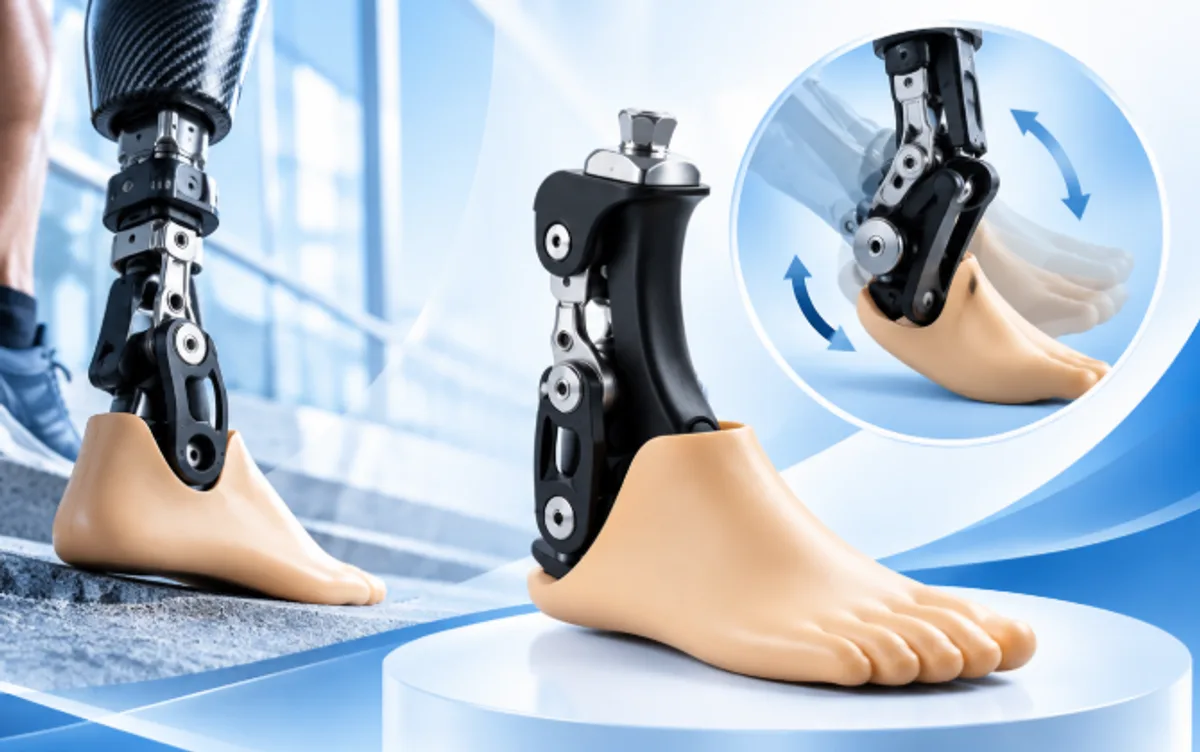
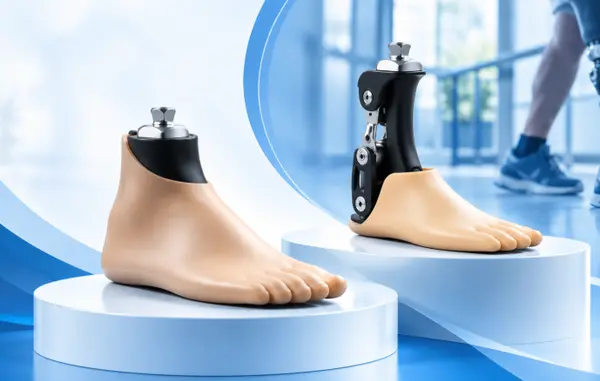
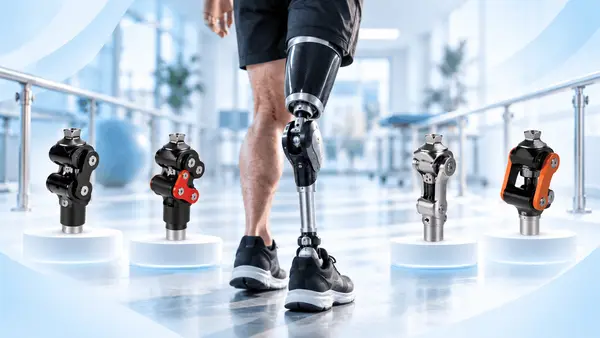
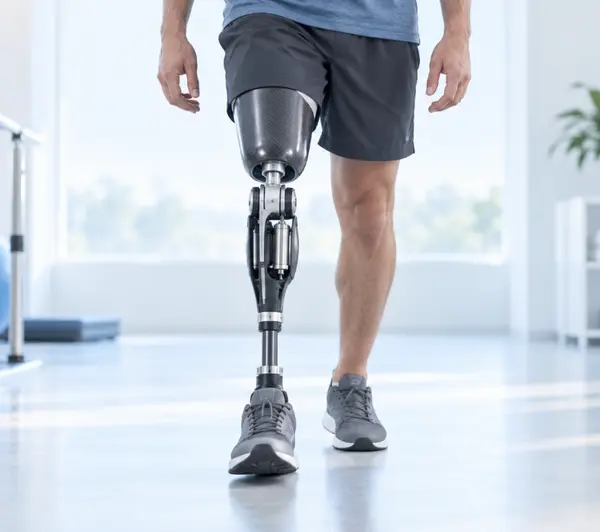
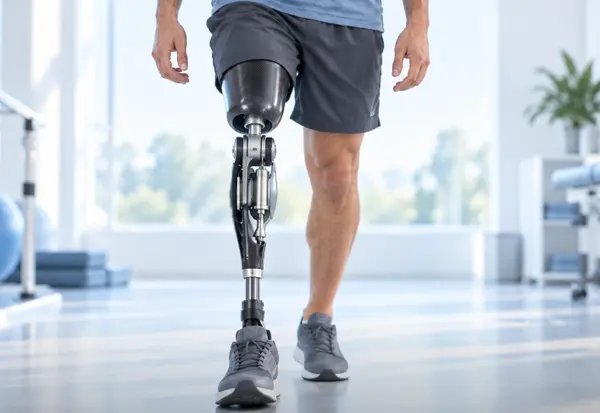
A multi-axis prosthetic foot is designed to provide movement in more than one direction at the ankle-foot system. Unlike simpler prosthetic feet with a fixed ankle or movement around a single axis, multi-axis designs can accommodate different movements according to the specific prosthetic mechanism.
This adaptability can help the prosthetic foot respond to variations in the walking surface and reduce the need for the user to compensate for every change in terrain through the knee, hip, or upper body.
Multi-axis technology can be particularly useful for users who move through different environments and require greater adaptability from their prosthesis. However, the appropriate prosthetic foot should always be selected according to the patient's mobility level, body weight, amputation level, balance, walking pattern, lifestyle, and rehabilitation goals.
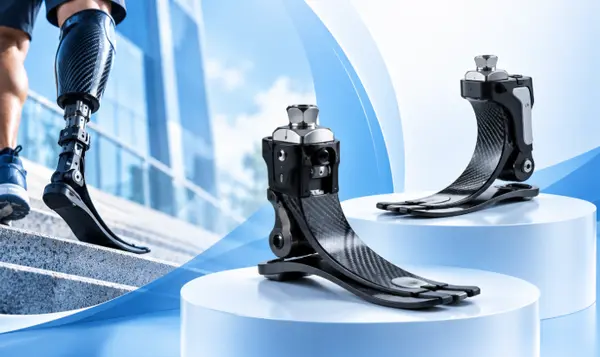
The available portfolio includes multi-axis technology as part of the more advanced prosthetic-foot category, including carbon-fiber systems designed for higher functional demands.
Who May Benefit from Multi-Axis Prosthetic Feet?
Multi-axis prosthetic feet may be considered for lower-limb amputees who:
Walk regularly outside the home.
Need to move across different or uneven surfaces.
Require greater adaptability than a fixed or single-axis prosthetic foot can provide.
Have sufficient balance and functional mobility to benefit from multidirectional movement.
Want improved comfort when walking across changing terrain.
Have functional and rehabilitation goals that require a more adaptable prosthetic system.
Suitability depends on the specific component selected and should not be determined by activity level alone.
How Multi-Axis Prosthetic Feet Work
Multi-axis prosthetic feet are designed to accommodate movement across more than one plane.
Depending on the specific design, the prosthetic foot may allow combinations of ankle and foot movement that help it conform to the walking surface.
This can be particularly useful when walking on surfaces that are not completely flat, such as ramps, slopes, irregular ground, or changing outdoor terrain.
Rather than remaining completely rigid, the foot can respond mechanically to changes beneath it, helping maintain contact with the surface and supporting the overall stability of the prosthetic system.
Assessment and Prosthetic Fitting
Before selecting a multi-axis prosthetic foot, the prosthetic team should perform an individualized assessment.
Important considerations include:
Mobility Level
The patient's current and expected functional activity should be evaluated before selecting the component.
Body Weight
Every prosthetic foot has manufacturer-defined weight limits and component specifications.
Amputation Level
The level of amputation affects the complete prosthetic configuration and available space for components.
Balance and Gait
Walking pattern, stability, muscle control, and the use of mobility aids influence whether a multi-axis system is appropriate.
Walking Environment
The surfaces the patient regularly encounters at home, work, and outdoors are important when determining the required level of adaptability.
Socket and Alignment
The prosthetic foot is only one component of the complete prosthesis. Socket fit and proper alignment are essential for comfortable and effective function.
Available Multi-Axis Prosthetic Foot Technology
The supplied prosthetic portfolio includes Uniprox F90, a multiaxial carbon-fiber spring foot incorporating an ankle joint.
The system includes individual bumper configuration for axial, anterior, and posterior alignment. According to the supplied specifications, it is designed for K3/K4 highly active users and supports a maximum patient weight of 125 kg. Prosthetic feet
This illustrates how multi-axis movement can also be integrated with advanced carbon-fiber technology to address higher functional requirements.
Multi-Axis vs Single-Axis Prosthetic Feet
A single-axis prosthetic foot primarily provides controlled movement around one ankle axis.
A multi-axis prosthetic foot allows the prosthetic system to accommodate movement in multiple directions, providing greater adaptability to changing surfaces.
The choice between them depends on the patient's functional needs rather than simply selecting the more advanced technology.
For a patient who primarily requires stable, predictable walking, a simpler prosthetic foot may be sufficient. For another patient who regularly encounters variable terrain and has greater mobility requirements, a multi-axis design may provide additional functional benefits.
Rehabilitation and Gait Training
Successful prosthetic rehabilitation involves more than selecting the prosthetic foot.
After fitting and alignment, gait training can help the patient learn how to use the prosthesis effectively across different environments.
Rehabilitation may focus on:
Balance and weight transfer.
Walking technique.
Controlling the prosthesis on different surfaces.
Navigating ramps and slopes.
Improving endurance and confidence.
Functional activities related to the patient's everyday life.
Adjustments may also be required as the patient becomes accustomed to the prosthesis and progresses through rehabilitation.
Prosthetic Care with Macrocare
Macrocare can coordinate the patient's prosthetic journey from assessment and component selection to fitting, alignment, and rehabilitation.
The objective is to select a complete prosthetic system based on the patient's individual requirements rather than choosing a component based solely on its technology or brand.
Factors including mobility level, body weight, amputation characteristics, walking environment, lifestyle, and functional goals are considered when coordinating the appropriate prosthetic solution.