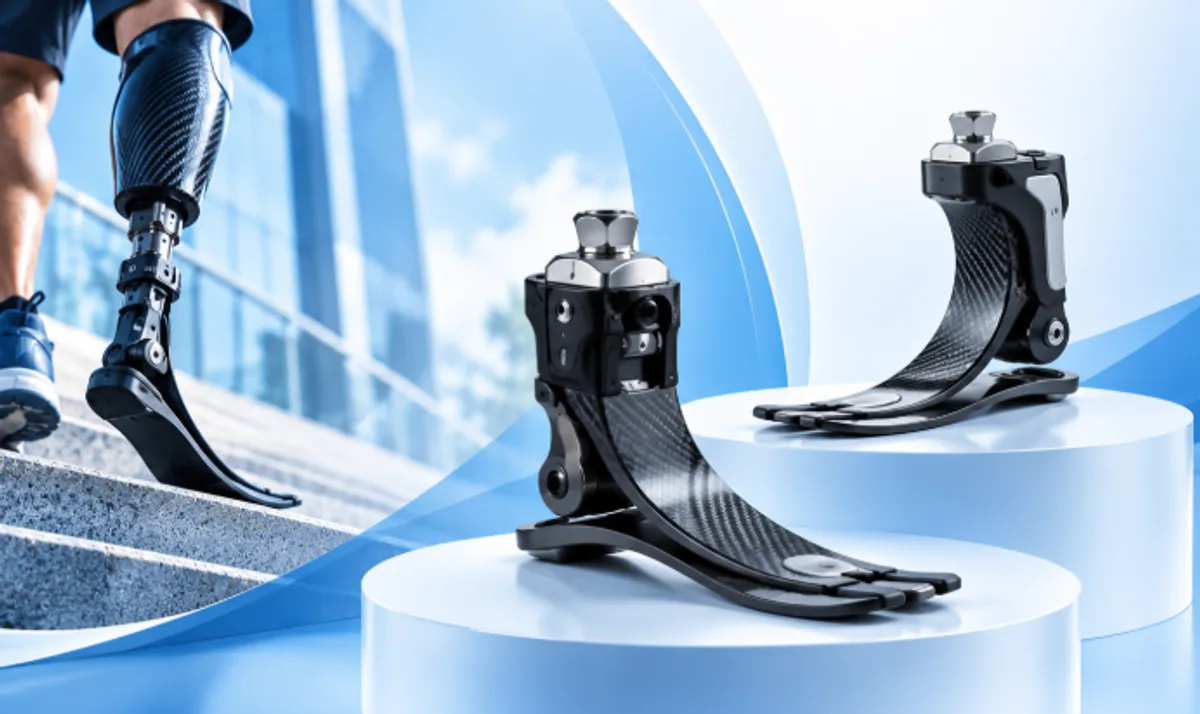
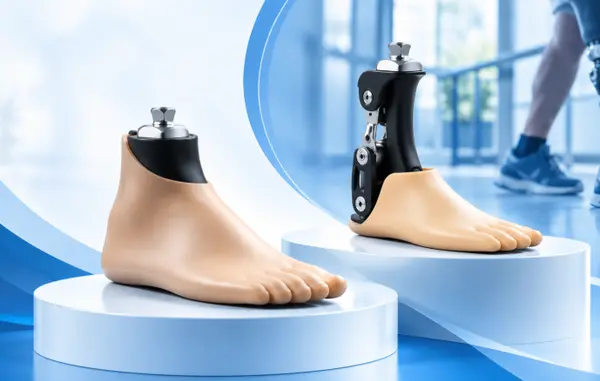
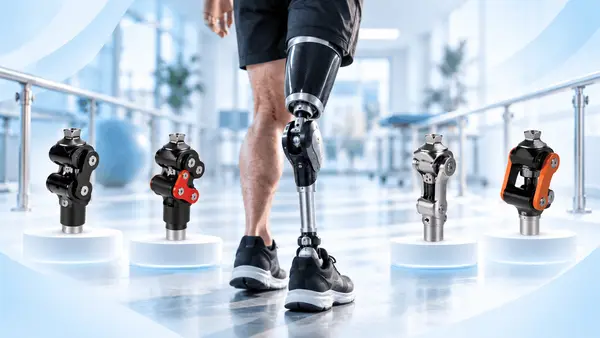
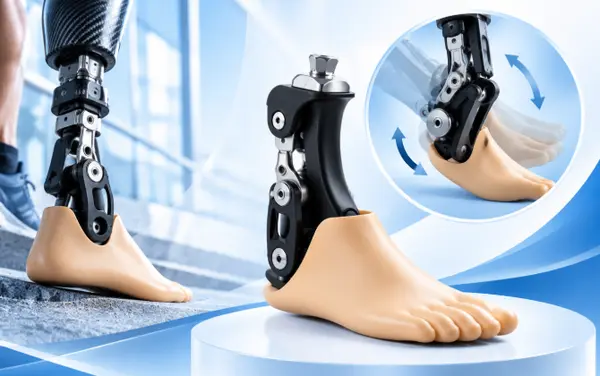
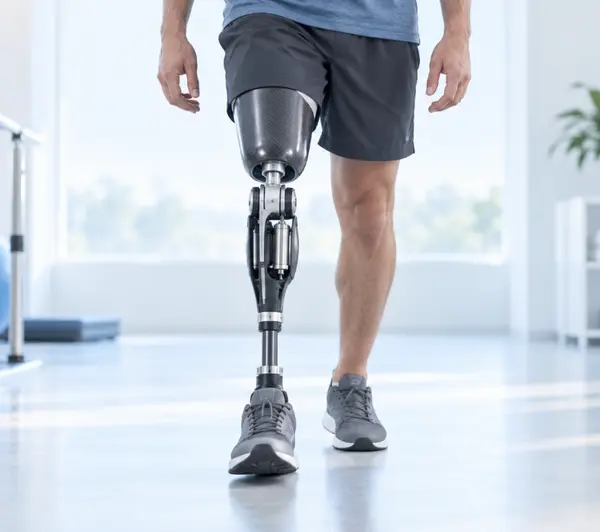
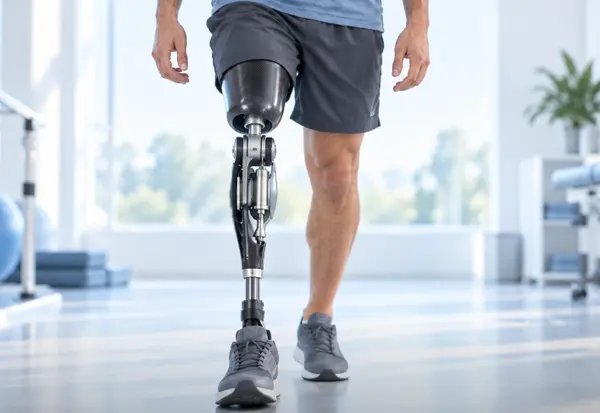
Carbon fiber prosthetic feet are designed to provide a more dynamic response during walking than conventional prosthetic feet.
Carbon fiber components can flex when loaded during the stance phase of walking and release part of the stored energy as the user moves forward. This principle is commonly referred to as energy storage and return.
Different designs provide different levels of flexibility, stability, shock absorption, rotation, and energy return. For this reason, not all carbon fiber prosthetic feet are intended for the same type of user.
The available portfolio includes carbon fiber feet covering mobility levels from K1 through K4, depending on the specific model. Some are designed for everyday community mobility, while others are intended for users with substantially higher functional demands. Prosthetic feet
Selection should therefore be based on the patient's mobility level, body weight, amputation level, gait, walking environment, lifestyle, footwear requirements, and rehabilitation goals.
Who May Benefit from Carbon Fiber Prosthetic Feet?
Carbon fiber and energy-storing prosthetic feet may be considered for people who:
Require a lightweight and responsive prosthetic foot.
Walk regularly in the community.
Need greater energy return during walking.
Have moderate to high functional mobility.
Walk at different speeds.
Regularly encounter different walking environments.
Require greater shock absorption or rotational control depending on the selected system.
Want to progress toward more demanding mobility and rehabilitation goals.
Carbon fiber technology is not restricted to highly active or athletic users. The portfolio includes models covering several mobility categories, including K1, K2, K3, and K4 depending on the component selected. Prosthetic feet
How Energy-Storing Prosthetic Feet Work
Energy-storing prosthetic feet use flexible components, commonly made from carbon fiber, that deform under load.
During walking, the carbon structure flexes as body weight passes over the prosthetic foot. Part of this mechanical energy is stored within the structure and subsequently released as the user progresses toward toe-off.
The characteristics of this response depend on the design of the foot, carbon-fiber geometry, stiffness category, patient weight, alignment, and walking pattern.
This allows different carbon-fiber feet to be configured for very different functional requirements.
Assessment and Prosthetic Foot Selection
Choosing a carbon fiber prosthetic foot requires an individualized prosthetic assessment.
Mobility Level
The patient's K-level and expected functional activity help determine the appropriate category of prosthetic foot.
Body Weight
Carbon feet are available in different stiffness categories and weight ranges. Selecting the correct category is important for both performance and safety.
Walking Speed and Activity
Some systems are designed for everyday variable-cadence walking, while others support substantially higher functional demands.
Amputation Level
The amputation level and available prosthetic build height influence which components can be incorporated into the prosthesis.
Walking Environment
Community walking, uneven terrain, ramps, long-distance walking and other environmental demands should be considered.
Water Exposure
Certain models provide water-resistant or waterproof configurations for patients whose lifestyle requires them.
Socket and Alignment
Performance of the prosthetic foot also depends on appropriate socket fit and accurate alignment of the complete prosthetic system.
Available Metiz Carbon Fiber Prosthetic Feet
The portfolio includes several Metiz carbon-fiber technologies.
Metiz 2H07Y incorporates adjustable heel height and a hydraulic ankle. It is intended for K1/K2/K3 users and is available for patient weights from approximately 50 to 125 kg. Prosthetic feet
Metiz 2H09Y incorporates a polyurethane heel and provides medium to high energy-saving characteristics. It is intended for K1/K2/K3 users weighing approximately 55 to 125 kg. Prosthetic feet
Metiz 2H20Y and 2H21Y are carbon feet available in multiple stiffness categories selected according to patient weight. Both cover K1/K2/K3 mobility levels, while the 2H21Y features a slimmer cosmetic footshell intended to accommodate women's footwear more conveniently. Prosthetic feet
Metiz 2H15Y is designed for K2/K3/K4 activity levels and is available in eight stiffness categories for patient weights ranging from approximately 45 to 130 kg. Prosthetic feet
Metiz 2H17YB is a waterproof carbon foot, including suitability for salt-water exposure according to the supplied specifications. It supports K2/K3/K4 users and is available for weights from approximately 45 to 150 kg.
Available Uniprox Carbon Fiber Prosthetic Feet
Uniprox F63 combines a carbon-fiber foot with a cushioned heel and integrated titanium pyramid adapter. It supports K1/K2/K3 users, is water resistant, and has a maximum specified patient weight of 136 kg.
Uniprox F64 features a separated dynamic forefoot designed to provide a high degree of stability. It is water resistant, supports K1/K2/K3, and accommodates patient weights up to 205 kg according to the supplied specifications. Prosthetic feet
Available Össur Carbon Fiber Prosthetic Feet
The portfolio also includes several advanced Össur Pro-Flex and Vari-Flex systems.
Pro-Flex LP Torsion combines a Pro-Flex foot with a torsion module to provide energy return while helping reduce shear forces on the residual limb. It supports K1/K2/K3 users up to 147 kg.
Pro-Flex Terra combines flexibility and softness with more powerful energy return and supports K1/K2/K3 users up to 166 kg.
Pro-Flex XC Torsion is designed for active users and combines energy return with shock absorption and rotational capabilities. The supplied specifications list it for K2/K3/K4 users up to 147 kg.
Pro-Flex XC supports relatively active users, including walking, hiking, and jogging, and is listed for K2/K3 users up to 166 kg.
Vari-Flex combines lightweight construction, comfort, and dynamic response and supports K1/K2/K3 users weighing up to 166 kg. Prosthetic feet
Carbon Fiber Prosthetic Feet and Activity Levels
There is no single carbon fiber foot suitable for every patient.
The portfolio ranges from systems suitable for K1/K2 users to advanced designs capable of supporting K3/K4 mobility.
For this reason, choosing a carbon fiber foot should focus on matching the mechanical characteristics of the component to the patient's actual and expected functional requirements rather than simply selecting the most technologically advanced model.
Rehabilitation and Gait Training
After fitting a carbon fiber prosthetic foot, rehabilitation may be required to help the patient use its dynamic characteristics effectively.
Training can include:
Balance and weight transfer.
Gait symmetry.
Variable-speed walking.
Walking on different surfaces.
Ramp and stair negotiation.
Endurance training.
Functional mobility.
Safe progression toward higher activity levels when appropriate.
The prosthetic system may also require adjustments as the patient's walking pattern and functional ability develop.
Prosthetic Care with Macrocare
Macrocare coordinates access to prosthetic assessment, component selection, fitting, alignment, and rehabilitation according to the patient's individual needs.
The objective is to select the appropriate prosthetic technology according to mobility level, body weight, amputation characteristics, walking environment, lifestyle, and rehabilitation goals, while providing access to different prosthetic-foot technologies and manufacturers.