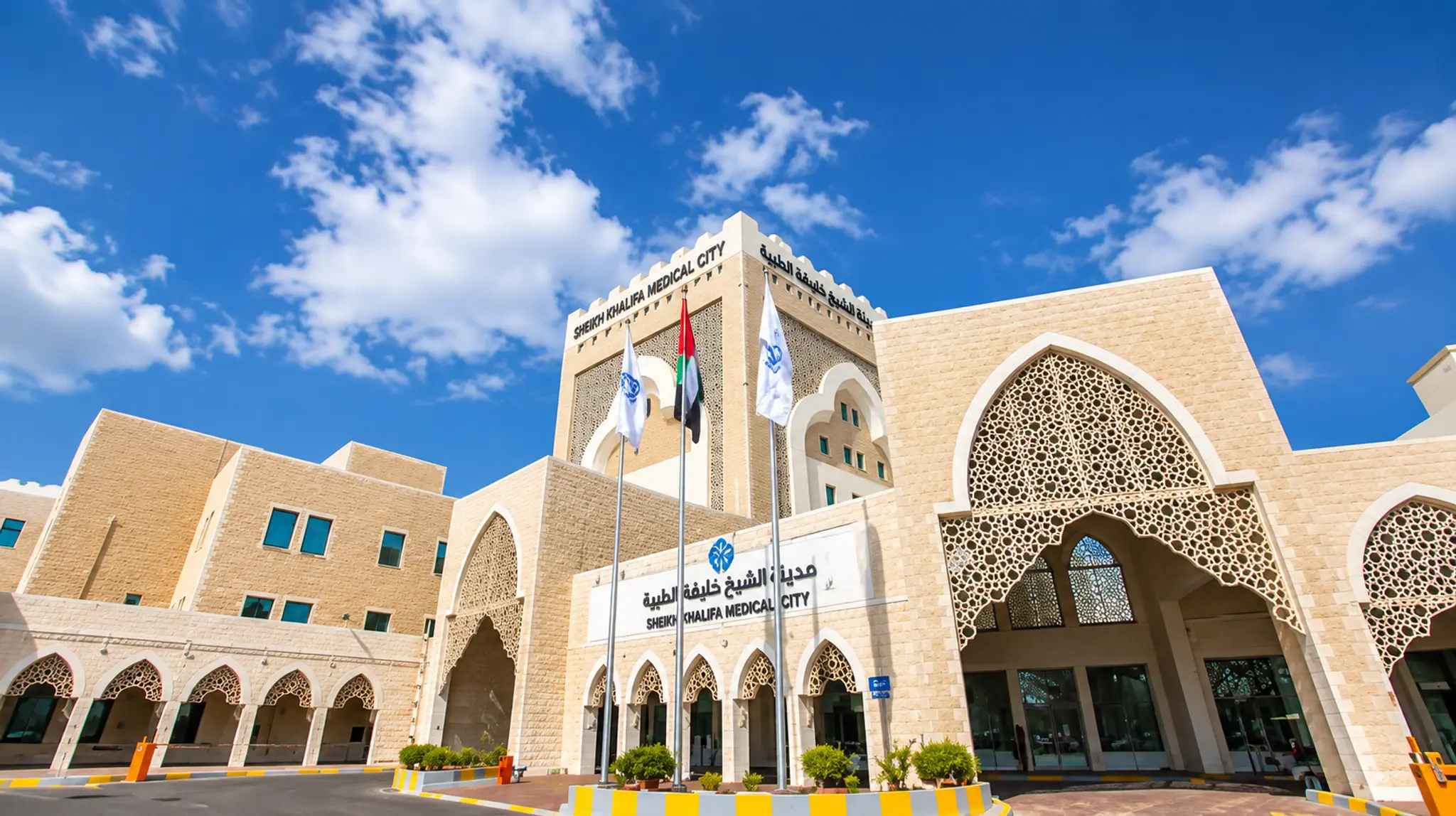
Sheikh Khalifa Medical City (SKMC)
Hospital multidisciplinar
One of the major specialized medical institutions in Abu Dhabi
- Abu Dhabi – UAEDubai International Airport (DXB)
a unos 100 km de distancia
Sheikh Khalifa Medical City (SKMC) is a major tertiary healthcare institution in Abu Dhabi, United Arab Emirates, providing specialized medical care, advanced surgical services, and critical care for adults and children. The hospital offers a broad range of medical and surgical specialties, supported by multidisciplinary teams and dedicated clinical programs.
SKMC is particularly recognized for its advanced organ transplantation services, kidney transplantation, pediatric cardiac surgery, congenital heart disease treatment, pediatric critical care, and complex pediatric surgery. Its Transplant Institute provides kidney transplantation for adults and children, including living and deceased donor kidney transplantation, as well as a paired kidney exchange program. The institute is also expanding its liver transplantation services for adult and pediatric patients.
The hospital is also home to a major pediatric cardiac program, offering complex congenital heart surgery, neonatal open-heart surgery, pediatric interventional cardiology, hybrid cardiac procedures, and advanced life support using Extracorporeal Membrane Oxygenation (ECMO).
Through Macrocare, patients can submit their medical reports, laboratory results, and imaging studies for case organization and coordination. Macrocare can assist with identifying the relevant specialty, coordinating medical consultations and appointment requests, and organizing the medical documentation required for further assessment.
Major Medical Specialties and Advanced Services at SKMC
Adult Kidney Transplantation.
Pediatric Kidney Transplantation.
Deceased Donor Kidney Transplantation.
Living Donor Kidney Transplantation.
Paired Kidney Exchange Program.
Adult Liver Transplantation.
Pediatric Liver Transplantation.
Living Donor Liver Transplantation.
Pediatric Cardiac Surgery.
Complex Congenital Heart Surgery.
Neonatal Cardiac Surgery.
Pediatric Interventional Cardiology.
Hybrid Cardiac Procedures.
Extracorporeal Membrane Oxygenation (ECMO).
Pediatric Nephrology and Kidney Care.
Urology and Endoscopic Urological Surgery.
Hepatobiliary and Pancreatic Surgery.
Gastrointestinal Surgery.
Colorectal Surgery.
Pediatric General Surgery.
Pediatric Urology.
Pediatric Oncology and Hematology.
Pediatric Bone Marrow Transplant Care.
Vascular Surgery.
Neurosurgery.
Orthopedic Surgery.
Adult and Pediatric Cardiology.
Oncology and Hematology.
Critical Care and Intensive Care.
Physical Medicine and Rehabilitation.
Kidney Transplantation – Adult and Pediatric Kidney Transplant
Kidney transplantation is one of the major specialized services at Sheikh Khalifa Medical City. The hospital's Transplant Institute provides comprehensive kidney transplant care, including patient assessment, transplant surgery, and long-term follow-up.
The program includes transplantation from both living and deceased donors, as well as specialized pediatric kidney transplant services.
The kidney transplant services include:
Living Donor Kidney Transplantation.
Deceased Donor Kidney Transplantation.
Adult Kidney Transplantation.
Pediatric Kidney Transplantation.
Paired Kidney Exchange Program.
Pre-transplant medical assessment.
Donor evaluation and compatibility assessment.
Post-transplant kidney function monitoring.
Immunosuppressive medication management.
Long-term transplant follow-up.
Assessment and management of potential transplant complications.
Deceased Donor Kidney Transplantation
SKMC provides kidney transplantation from deceased donors through its established transplant program and in coordination with the UAE's national organ donation framework.
This option may be relevant for patients with advanced kidney failure who do not have a suitable living donor. Patient eligibility, donor allocation, compatibility, and waiting-list requirements are determined according to the applicable medical and regulatory criteria.
Living Donor Kidney Transplantation
Living donor kidney transplantation involves transplanting a kidney from a medically suitable living donor to a recipient with advanced kidney disease.
The process requires detailed medical and immunological assessment of both the donor and recipient, including compatibility testing and evaluation of the donor's overall health.
Pediatric Kidney Transplantation
SKMC provides specialized kidney transplantation services for children and adolescents with advanced kidney disease.
The pediatric program involves collaboration between pediatric nephrologists, transplant surgeons, pediatric urologists, anesthesiologists, and critical care specialists.
Care includes pre-transplant assessment, surgical planning, post-operative monitoring, immunosuppressive treatment, and long-term follow-up.
Paired Kidney Exchange Program
The paired kidney exchange program may help donor-recipient pairs who are medically or immunologically incompatible with each other.
Through an organized exchange between compatible pairs, transplantation may become possible for patients who otherwise cannot proceed with their intended donor.
Eligibility depends on compatibility testing and the program's medical and regulatory requirements.
Liver Transplantation – Adult and Pediatric Liver Transplant
SKMC's Transplant Institute is expanding its liver transplantation services for adults and children, including living donor liver transplantation.
Liver transplantation may be considered for patients with advanced liver disease, selected liver cancers, or other conditions where transplantation is an appropriate treatment option.
The liver transplant pathway may include:
Adult Liver Transplantation.
Pediatric Liver Transplantation.
Living Donor Liver Transplantation.
Pre-transplant medical evaluation.
Donor assessment.
Liver function and disease-stage evaluation.
Pre-operative medical optimization.
Post-transplant monitoring.
Immunosuppressive medication management.
Long-term transplant follow-up.
The suitability of transplantation depends on the underlying liver condition, disease stage, overall health, and transplant team assessment.
Pediatric Cardiac Surgery – Congenital Heart Surgery
SKMC's Children's Heart Institute is a major specialized pediatric cardiac center in the UAE. Its program provides surgical assessment and treatment for congenital and acquired heart conditions in newborns, infants, children, adolescents, and selected adults with congenital heart disease.
The program includes complex congenital heart surgery, neonatal open-heart surgery, hybrid cardiac procedures, and specialized post-operative cardiac intensive care.
Congenital Heart Defect Surgery
Congenital heart defects are structural abnormalities of the heart or major blood vessels that develop before birth. Some require monitoring, while others need catheter-based intervention or surgery.
Conditions assessed by pediatric cardiac teams may include:
Atrial Septal Defect (ASD).
Ventricular Septal Defect (VSD).
Patent Ductus Arteriosus (PDA).
Tetralogy of Fallot.
Transposition of the Great Arteries.
Pulmonary Valve Stenosis.
Aortic Coarctation.
Complex congenital heart defects.
Single Ventricle Heart Conditions.
The choice between observation, catheter intervention, and surgery depends on the specific defect, its severity, and its effect on the child's circulation and development.
Neonatal Cardiac Surgery
Some congenital heart conditions require surgical treatment during the first days or weeks of life.
Neonatal cardiac surgery involves highly specialized surgical, anesthesia, neonatal, and cardiac intensive care teams. The treatment plan depends on the anatomy of the heart defect, the newborn's condition, and the urgency of intervention.
SKMC lists complex neonatal and infant open-heart surgery among its specialized cardiac services.
Complex Pediatric Cardiac Operations
The Children's Heart Institute lists several advanced cardiac operations for selected congenital heart conditions, including:
Arterial Switch Operation.
Norwood Procedure.
Damus-Kaye-Stansel Procedure.
Double Switch Operation.
Ross Procedure.
Baby-Ross-Konno Procedure with Homograft Implantation.
These operations are used for specific and often complex congenital heart conditions. The appropriate surgical approach is determined through detailed cardiac imaging and multidisciplinary assessment.
Pediatric Interventional Cardiology – Cardiac Catheterization
Pediatric interventional cardiology provides diagnostic and treatment procedures for selected congenital and acquired heart conditions using catheter-based techniques.
These procedures may help treat certain heart defects without requiring open-heart surgery.
Services include:
Diagnostic Cardiac Catheterization.
Cardiac Stent Placement.
Atrial Septal Defect Device Closure.
Ventricular Septal Defect Device Closure in selected cases.
Patent Ductus Arteriosus Closure.
Catheter-based treatment of selected valve stenosis.
Interventions for aortic coarctation.
Catheter-based treatment of selected congenital heart defects.
Hybrid procedures combining catheter-based and surgical techniques.
The choice between catheter intervention and surgery depends on the type, size, and location of the defect and its effect on cardiac function.
Extracorporeal Membrane Oxygenation (ECMO)
SKMC provides advanced cardiac and respiratory support through Extracorporeal Membrane Oxygenation (ECMO) for selected critically ill patients.
ECMO is a form of temporary life support that can provide oxygenation and carbon dioxide removal outside the body. Depending on the configuration, it can also support circulation when the heart is unable to pump adequately.
ECMO may be considered in selected cases involving:
Severe respiratory failure.
Severe cardiac failure.
Cardiogenic shock.
Critical illness following cardiac surgery.
Severe cardiac or respiratory failure in children.
Selected cases requiring advanced temporary circulatory support.
ECMO is a highly specialized intervention requiring continuous monitoring by experienced intensive care, cardiac, and perfusion teams. Its use depends on strict clinical criteria.
Hybrid Pediatric Cardiac Procedures
Hybrid cardiac procedures combine conventional surgery with catheter-based interventions and advanced imaging techniques.
These approaches may be used in selected patients with complex congenital heart defects when a combined treatment strategy is considered appropriate.
SKMC's pediatric cardiac program includes hybrid procedures and minimally invasive hybrid cardiac surgery as part of its advanced congenital heart services.
Pediatric Surgery and Neonatal Surgery
SKMC provides specialized surgical care for newborns, infants, children, and adolescents.
Its pediatric surgical services cover general pediatric surgery, neonatal surgery, pediatric urology, and selected pediatric oncological procedures.
Neonatal Surgery and Congenital Conditions
Conditions that may require specialized neonatal surgical assessment include:
Esophageal Atresia and Tracheoesophageal Fistula.
Congenital Diaphragmatic Hernia.
Intestinal Atresia.
Hirschsprung Disease.
Anorectal Malformations.
Abdominal Wall Defects, including Gastroschisis.
Selected congenital gastrointestinal abnormalities.
The timing and type of surgery depend on the newborn's condition, the specific abnormality, and the presence of associated medical problems.
Pediatric Urology
Pediatric urological services may include assessment and treatment of:
Hypospadias.
Undescended Testis.
Vesicoureteral Reflux.
Pelvi-Ureteric Junction (PUJ) Obstruction.
Congenital Urinary Tract Abnormalities.
Hydrocele.
Pediatric Hernias.
Selected congenital kidney and urinary tract conditions.
Pediatric Surgical Oncology
Children with tumors requiring surgical assessment may include patients with:
Wilms Tumor.
Neuroblastoma.
Soft Tissue Tumors.
Germ Cell Tumors.
Selected abdominal and solid tumors requiring surgical management.
Surgery may form part of a wider treatment plan involving pediatric oncology, hematology, radiology, and other specialties.
Pediatric Bone Marrow Transplant Care
SKMC provides specialized pediatric hematology, oncology, and bone marrow transplant-related care in collaboration with Cincinnati Children's.
The service includes assessment and care for children with selected blood disorders, cancers, and conditions that may require hematopoietic stem cell transplantation.
Care may involve:
Pre-transplant assessment.
Management of pediatric blood disorders.
Pediatric cancer treatment coordination.
Care before and after stem cell transplantation.
Monitoring for transplant-related complications.
Pediatric critical care when required.
The exact transplant procedure and where it is performed depend on the patient's condition and the scope of the relevant clinical program.
Hepatobiliary and Pancreatic Surgery
Hepatobiliary and pancreatic surgery focuses on diseases of the liver, gallbladder, bile ducts, and pancreas.
Patients may require specialist assessment for benign conditions, complex surgical diseases, or tumors involving these organs.
Relevant surgical areas include:
Liver Surgery.
Pancreatic Surgery.
Gallbladder Surgery.
Bile Duct Surgery.
Liver Tumor Surgery.
Pancreatic Tumor Surgery.
Selected complex gastrointestinal procedures.
Surgical management of selected transplant-related complications.
The possibility of surgical removal depends on tumor location, disease extent, liver and pancreatic function, and the patient's overall health.
Advanced Urology and Endoscopic Urological Surgery
SKMC provides urological services for conditions affecting the kidneys, ureters, bladder, prostate, and male reproductive system.
Its published urological services include:
Laser Treatment of Urinary Stones.
Kidney and Ureteric Stone Surgery.
Rezum Water Vapor Therapy for Benign Prostatic Enlargement.
Micro-TESE for Selected Cases of Male Infertility.
Vasectomy Reversal.
Laparoscopic and Open Donor Nephrectomy.
Urological Procedures Related to Kidney Transplantation.
Cystoscopy and Urethroscopy.
Treatment selection depends on the diagnosis, stone size and location, prostate condition, urinary function, and individual patient factors.
Gastrointestinal, Colorectal and General Surgery
SKMC provides surgical services for diseases affecting the upper and lower gastrointestinal tract, colon, rectum, and abdominal wall.
Relevant services include:
Upper Gastrointestinal Surgery.
Colorectal Surgery.
Pelvic Floor Surgery.
Upper Gastrointestinal Endoscopy.
Lower Gastrointestinal Endoscopy.
Complex Endoscopic Polypectomy.
Complex Hernia Surgery.
Abdominal Wall Reconstruction.
Emergency General Surgery.
Selected Minimally Invasive Gastrointestinal Procedures.
The appropriate treatment depends on the underlying condition, diagnostic findings, and the patient's overall health.
Minimally Invasive and Laparoscopic Surgery
Minimally invasive surgery uses small incisions and specialized instruments to perform selected surgical procedures.
SKMC offers minimally invasive and endoscopic surgical services across several specialties.
These may include:
Laparoscopic Cholecystectomy.
Laparoscopic Appendectomy.
Laparoscopic Hernia Repair.
Selected Gastrointestinal Procedures.
Thoracoscopic Surgery.
Thoracoscopic Sympathectomy for Selected Cases of Hyperhidrosis.
Selected Diagnostic and Therapeutic Minimally Invasive Procedures.
The suitability of minimally invasive surgery depends on the condition, previous operations, and the patient's clinical assessment.
Vascular Surgery
Vascular surgery focuses on conditions affecting arteries and veins.
Assessment and treatment may involve conventional surgical techniques or minimally invasive interventions, depending on the location and severity of the vascular condition.
The treatment plan is determined according to the degree of obstruction, aneurysm formation, circulation impairment, and overall patient condition.
Critical Care and Intensive Care Services
SKMC provides specialized intensive care for critically ill patients and those requiring close monitoring after major surgery, organ transplantation, or complex medical treatment.
Critical care services include:
Advanced Respiratory Support.
Continuous Hemodynamic Monitoring.
Management of Acute Respiratory Failure.
Sepsis and Septic Shock Management.
Multi-Organ Failure Management.
ECMO and Extracorporeal Life Support.
Point-of-Care Ultrasound.
Post-Operative Critical Care.
Post-Transplant Intensive Care.
Pediatric Intensive Care.
Pediatric Cardiac Intensive Care.
Other Medical Specialties
In addition to its advanced surgical and transplant programs, SKMC provides medical services across a broad range of specialties, including:
Adult and Pediatric Nephrology.
Adult and Pediatric Cardiology.
Gastroenterology and Hepatology.
Oncology and Hematology.
Endocrinology and Diabetes.
Neurology and Neurosurgery.
Orthopedic Surgery.
Ear, Nose and Throat Surgery.
Ophthalmology.
Dermatology.
Rheumatology.
Infectious Diseases.
Pulmonology and Respiratory Medicine.
Pediatric Metabolic and Genetic Medicine.
Physical Medicine and Rehabilitation.
Emergency Medicine.
Why Patients Choose Sheikh Khalifa Medical City
SKMC is an important referral destination for patients who require specialized assessment, complex surgery, or advanced medical treatment.
Key areas of expertise highlighted by the hospital include:
A dedicated Transplant Institute.
Adult and pediatric kidney transplantation.
Deceased donor and living donor kidney transplantation.
Paired kidney exchange services.
Adult and pediatric liver transplant services.
A major pediatric cardiac surgery program.
Complex congenital heart defect surgery.
Neonatal and infant open-heart surgery.
Pediatric interventional cardiology.
Hybrid cardiac procedures.
Advanced ECMO and critical care capabilities.
Specialized pediatric surgery and neonatal surgery.
Pediatric hematology and oncology services.
Pediatric bone marrow transplant-related care.
Multidisciplinary care involving surgical, medical, and intensive care teams.
Collaboration with Cincinnati Children's for selected pediatric services.
Medical Appointment Coordination at Sheikh Khalifa Medical City Through Macrocare
Patients seeking medical assessment or advanced treatment at Sheikh Khalifa Medical City can contact Macrocare to organize their medical records and coordinate requests related to the appropriate specialty.
Macrocare can assist with:
Organizing medical reports, laboratory results, and imaging studies.
Preparing a structured medical case file.
Coordinating case review requests through available communication channels.
Identifying the relevant medical specialty.
Coordinating consultation and appointment requests where available.
Clarifying the medical documents required for assessment.
Requesting preliminary treatment cost information when available.
Supporting the organization of medical care for patients traveling from outside the UAE when needed.
Final acceptance, treatment recommendations, appointment availability, and the choice of medical procedure remain subject to SKMC's assessment and approval.
Medical Documents Required for Case Review
The required documents depend on the patient's diagnosis and the requested specialty. The following records are useful when submitting a medical case.
For Kidney Transplant Cases:
Recent kidney function tests, including creatinine, urea, and estimated glomerular filtration rate.
Dialysis reports, if applicable.
Urinalysis and urine protein results.
Blood group.
Histocompatibility testing, if available, including HLA typing and crossmatch.
Kidney and renal vascular imaging reports.
Medical history and current medication list.
Donor evaluation reports, if a living donor is available.
Previous transplant reports, if applicable.
For Liver Transplant Cases:
Liver function tests.
Multiphasic CT or liver MRI.
Liver biopsy or pathology reports, if available.
Viral hepatitis test results, if relevant.
Gastrointestinal endoscopy reports, if applicable.
Kidney and cardiac assessment reports.
Previous liver treatment records.
Imaging and pathology reports for liver tumors, if applicable.
For Pediatric Cardiac Surgery Cases:
Pediatric cardiologist's report.
Echocardiography.
Electrocardiogram.
Previous cardiac catheterization reports, if available.
Cardiac CT or MRI, if performed.
Child's age and current weight.
Previous surgical reports.
Neonatal intensive care or cardiac intensive care records, if applicable.
For Pediatric Cardiac Catheterization Cases:
Echocardiography.
Electrocardiogram.
Previous catheterization reports.
Imaging and diagnostic reports describing the congenital heart defect.
Pediatric cardiologist's assessment.
For Pediatric and Neonatal Surgery Cases:
Child's age and weight.
Pediatric surgeon's or treating physician's report.
Ultrasound, CT, or MRI studies, depending on the condition.
Previous surgical reports.
Neonatal intensive care records, if applicable.
Relevant laboratory results.
For Hepatobiliary and Pancreatic Surgery Cases:
Multiphasic CT scans.
MRI and MRCP studies, if available.
Biopsy and pathology reports, if available.
Liver and pancreatic function tests.
Previous endoscopy reports.
Previous surgical reports.
Relevant oncology records, if applicable.
Frequently Asked Questions About Sheikh Khalifa Medical City
Does Sheikh Khalifa Medical City offer deceased donor kidney transplantation?
Yes. SKMC's official Transplant Institute lists both living and deceased donor kidney transplantation among its services. Patient eligibility and access to deceased donor organs depend on medical assessment and the applicable UAE organ donation and allocation requirements.
Does SKMC perform kidney transplants for children?
Yes. SKMC provides specialized pediatric kidney transplantation services for children and adolescents with advanced kidney disease, supported by pediatric nephrology and transplant teams.
Can patients receive a kidney transplant without a family donor?
SKMC lists deceased donor kidney transplantation and a paired kidney exchange program. These options may be relevant for patients who do not have a suitable compatible living donor. Eligibility depends on the transplant program's medical and regulatory criteria.
Does Sheikh Khalifa Medical City offer liver transplantation?
The hospital's Transplant Institute lists adult and pediatric liver transplantation services and living donor liver transplantation as part of its expanding transplant program. Patients should confirm current program availability and acceptance criteria before making treatment arrangements.
Does SKMC provide complex heart surgery for children?
Yes. The Children's Heart Institute provides specialized surgery for congenital heart defects, including complex neonatal and infant open-heart procedures, as well as hybrid cardiac interventions.
What advanced heart operations are available for children?
The hospital lists advanced procedures such as the Arterial Switch Operation, Norwood Procedure, Damus-Kaye-Stansel Operation, Double Switch Operation, Ross Procedure, and Baby-Ross-Konno Procedure with Homograft Implantation. These procedures are used for selected complex congenital heart conditions.
Does SKMC offer pediatric cardiac catheterization?
Yes. Pediatric interventional cardiology services include diagnostic catheterization, selected device closures, stent placement, and other catheter-based treatments for congenital heart conditions.
Does Sheikh Khalifa Medical City provide ECMO treatment?
Yes. SKMC lists ECMO and extracorporeal life support among its advanced critical care capabilities. These treatments may be used in selected cases of severe cardiac or respiratory failure.
Does SKMC offer liver and pancreatic tumor surgery?
SKMC lists hepatobiliary and pancreatic surgical services. Patients with liver or pancreatic tumors require specialist assessment to determine whether surgery or another treatment approach is appropriate.
Are advanced urological procedures available at SKMC?
Yes. Published services include laser urinary stone treatment, selected prostate procedures, Micro-TESE for male infertility, vasectomy reversal, donor nephrectomy, and urological procedures related to kidney transplantation.
Does SKMC treat children with complex medical and surgical conditions?
Yes. The hospital provides multidisciplinary pediatric services, including pediatric cardiac surgery, pediatric nephrology, pediatric oncology and hematology, pediatric surgery, neonatal care, and pediatric critical care. Selected pediatric services are supported through collaboration with Cincinnati Children's.
How can patients submit medical reports to Macrocare for SKMC case coordination?
Patients can send their available medical reports, laboratory results, and imaging studies to Macrocare. The team can help organize the medical file and coordinate a case review or consultation request through the available channels.
Can patients request an estimated treatment cost before traveling to Abu Dhabi?
Macrocare can assist with requesting preliminary cost information when sufficient medical details and a proposed treatment plan are available. Final costs depend on the hospital's assessment, required investigations, treatment plan, length of stay, and any additional medical needs.
Procedimientos