
Grand Egyptian Museum
ca. 20 km entfernt
Cairo International Airport
ca. 25 km entfernt
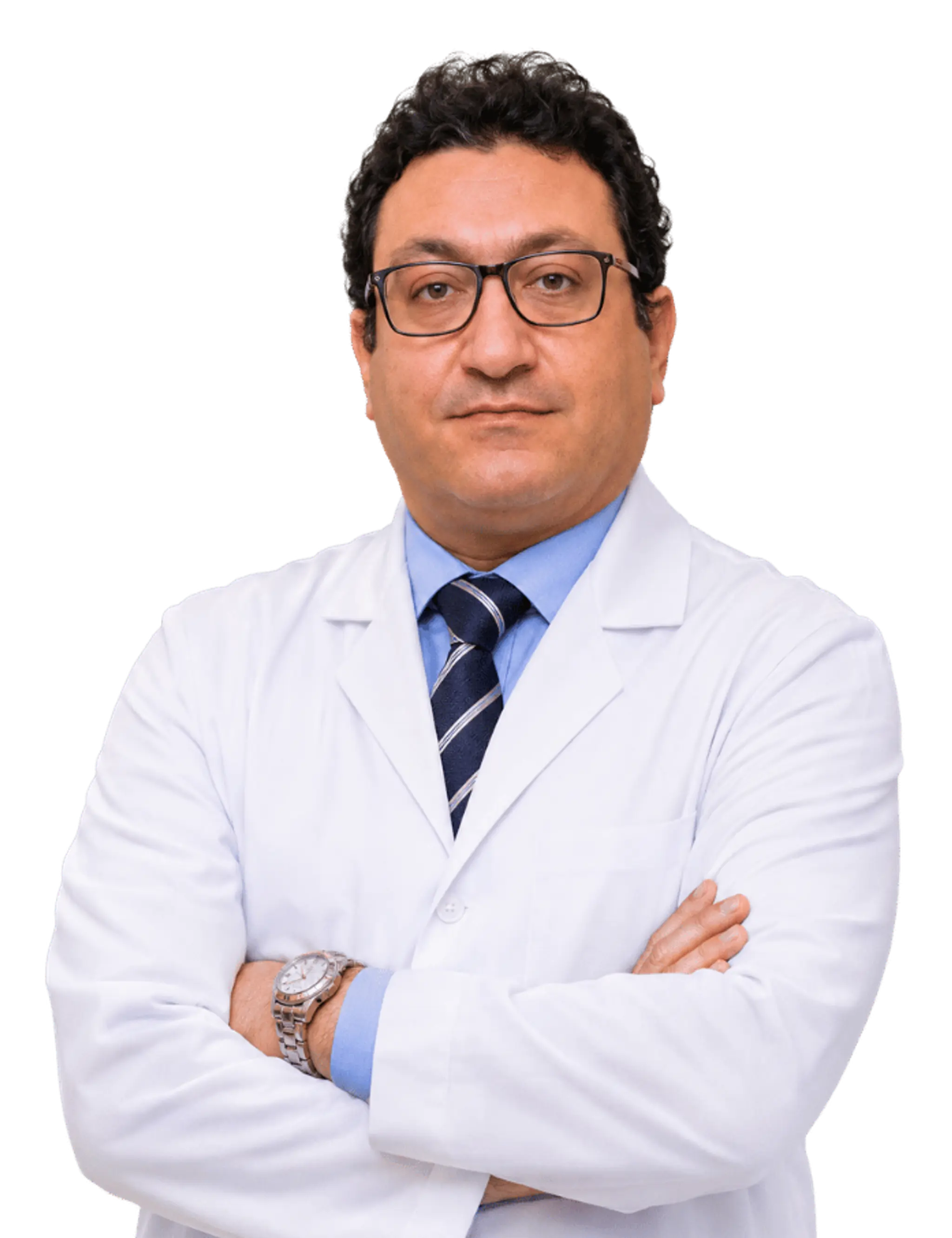
Prof. Dr. Ramy Ghali is a Professor of Medical Oncology at the Faculty of Medicine, Ain Shams University, and Head of the Medical Oncology Department at Al Salam International Hospital in Egypt. His professional profile also includes membership in the European Society for Medical Oncology (ESMO) and the American Society of Clinical Oncology (ASCO).
Medical oncology focuses on the diagnosis, assessment, and medical treatment of cancer. Treatment planning depends on several factors, including the cancer type, disease stage, tumor characteristics, molecular markers, previous treatments, and the patient's overall health.
Patients seeking a consultation with Prof. Dr. Ramy Ghali can contact Macrocare to submit their medical records for case review and coordinate a medical consultation or appointment. Macrocare helps organize medical documents and facilitate communication and appointment arrangements.
Medical Oncology Specialties of Prof. Dr. Ramy Ghali
Medical oncology covers the assessment and medical management of different types of cancer. Relevant areas include:
Cancer diagnosis and evaluation.
Cancer staging and assessment of disease progression.
Histopathology and biopsy report review.
Solid tumor assessment.
Chemotherapy.
Immunotherapy.
Targeted therapy.
Hormonal therapy for hormone-sensitive cancers.
Treatment response assessment.
Review of previous cancer treatment plans.
Cancer second opinions.
Follow-up during and after cancer treatment.
The appropriate treatment approach depends on the individual diagnosis and the medical findings available.
Cancer Diagnosis and Evaluation
Accurate cancer diagnosis is the foundation of an appropriate treatment plan. Evaluation may involve identifying the type of tumor, determining whether it is benign or malignant, and assessing whether the disease has spread.
Depending on the suspected cancer, the assessment may include:
Medical history and clinical examination.
Biopsy and histopathology reports.
CT scans.
MRI scans.
PET/CT imaging when indicated.
Blood tests and tumor markers when relevant.
Molecular and biomarker testing when appropriate.
Imaging findings alone may not be sufficient to establish a definitive cancer diagnosis. A tissue biopsy and pathology assessment may be required.
Cancer Staging
Cancer staging helps determine the extent of the disease and supports treatment planning.
For many solid tumors, doctors may use the TNM staging system, which assesses:
T – Tumor: The size and extent of the primary tumor.
N – Nodes: Whether nearby lymph nodes are affected.
M – Metastasis: Whether the cancer has spread to distant organs.
The stage of cancer, together with the tumor's biological characteristics and the patient's general health, helps determine the treatment objectives and available options.
Chemotherapy
Chemotherapy uses medications to destroy cancer cells or slow their growth and division.
Depending on the cancer type and stage, chemotherapy may be recommended:
Before surgery to reduce tumor size (Neoadjuvant Chemotherapy).
After surgery to reduce the risk of recurrence (Adjuvant Chemotherapy).
As a primary treatment in certain cancers.
To control advanced disease and help relieve symptoms.
Treatment protocols vary according to the diagnosis, pathology findings, previous treatments, and the patient's general condition.
Possible side effects include fatigue, nausea, hair loss, and changes in blood cell counts. The type and severity of side effects depend on the medications used and individual patient factors.
Immunotherapy for Cancer
Immunotherapy is a treatment approach that helps the immune system recognize and respond to cancer cells.
It may be considered for selected cancer types and patients, depending on factors such as:
Cancer type and stage.
Tumor characteristics.
Biomarker results, such as PD-L1 when relevant.
Previous treatments.
The patient's medical history and overall health.
Immunotherapy is not suitable for every cancer patient. It may also cause immune-related side effects affecting different organs, which require appropriate medical monitoring.
Targeted Therapy
Targeted therapy uses medications designed to act on specific molecular changes or proteins involved in cancer growth and progression.
Before considering targeted treatment, some patients may require molecular testing or biomarker analysis to identify whether a particular medication is appropriate.
The treatment decision depends on the cancer type, molecular profile, disease stage, and available treatment options.
Hormonal Therapy for Cancer
Hormonal therapy may be used in certain cancers whose growth is influenced by hormones, including some types of breast and prostate cancer.
Depending on the cancer, hormonal treatment may reduce hormone production or block the effects of hormones on cancer cells.
Treatment selection and duration depend on the tumor's hormone receptor status, stage, previous treatment, and the patient's overall condition.
Breast Cancer Treatment
Breast cancer treatment depends on the tumor subtype, stage, hormone receptor status, HER2 status, and other relevant clinical findings.
The diagnostic assessment may include:
Mammography.
Breast ultrasound.
Breast MRI when indicated.
Breast biopsy and histopathology.
Estrogen receptor (ER) testing.
Progesterone receptor (PR) testing.
HER2 testing.
Additional molecular or biomarker tests when appropriate.
Treatment options may include surgery, chemotherapy, radiation therapy, hormonal therapy, targeted therapy, or immunotherapy in selected cases.
Not every patient requires all treatment modalities. The treatment plan is determined according to the individual diagnosis.
Lung Cancer Treatment
Lung cancer is generally classified into two main categories:
Non-Small Cell Lung Cancer (NSCLC).
Small Cell Lung Cancer (SCLC).
Treatment planning depends on the cancer subtype, stage, molecular characteristics, and the patient's general health.
Diagnostic investigations may include:
Chest CT scan.
PET/CT when indicated.
Biopsy or lymph node sampling.
Histopathology.
Molecular testing and biomarker analysis when appropriate.
Depending on the case, treatment may involve surgery, chemotherapy, radiation therapy, immunotherapy, or targeted therapy.
Colorectal Cancer Treatment
Colorectal cancer includes cancers of the colon and rectum. Treatment depends on the location and stage of the tumor, pathology findings, and relevant molecular markers.
Diagnostic assessment may include:
Colonoscopy.
Tumor biopsy and histopathology.
CT scans of the chest, abdomen, and pelvis.
Molecular testing when indicated.
Treatment may involve surgery, chemotherapy, radiation therapy, or a combination of these approaches. Radiation therapy is particularly relevant in selected cases of rectal cancer.
Prostate Cancer Treatment
Prostate cancer management depends on the cancer grade, stage, PSA level, biopsy findings, imaging results, and the patient's general health.
Diagnostic investigations may include:
Prostate-Specific Antigen (PSA) testing.
Multiparametric prostate MRI.
Prostate biopsy.
Additional imaging when required to assess disease spread.
Treatment options may include active surveillance for selected low-risk cases, surgery, radiation therapy, hormonal therapy, or other treatments depending on the disease characteristics.
Gastrointestinal Cancer Treatment
Gastrointestinal cancers include cancers affecting the stomach, colon, rectum, pancreas, liver, and other parts of the digestive system.
Treatment planning requires identifying the exact tumor type, location, stage, and relevant biological characteristics.
Evaluation may involve:
Endoscopy and biopsy.
CT or MRI scans.
PET/CT in selected cases.
Histopathology review.
Molecular and biomarker testing when appropriate.
Treatment options may include surgery, chemotherapy, targeted therapy, or immunotherapy, depending on the specific diagnosis.
Cancer Second Opinion
A cancer second opinion can help patients understand their diagnosis and evaluate available treatment options before making important medical decisions.
A second opinion may be useful when:
A new cancer diagnosis has been established.
Several treatment options are available.
The patient is considering starting chemotherapy or immunotherapy.
The proposed treatment plan needs further review.
The patient has questions about pathology or imaging results.
The cancer has progressed or responded differently than expected.
A second opinion may involve reviewing the pathology report, imaging studies, cancer stage, previous treatments, and proposed treatment plan.
It does not necessarily mean changing the treating physician or stopping an ongoing treatment.
Treatment Approach of Prof. Dr. Ramy Ghali
Cancer treatment requires an individualized approach based on the patient's diagnosis and medical findings.
The assessment and treatment-planning process may involve:
Reviewing the patient's medical history and previous investigations.
Evaluating biopsy and histopathology reports.
Reviewing imaging studies.
Assessing cancer stage and disease extent.
Reviewing molecular markers and biomarker results when indicated.
Discussing appropriate treatment options.
Assessing treatment response.
Monitoring potential treatment-related side effects.
Considering the patient's overall health and quality of life.
Coordinating with other medical specialties when necessary, including surgical oncology and radiation oncology.
The most appropriate treatment plan depends on the individual case. There is no single treatment protocol that is suitable for every patient with the same cancer diagnosis.
Professional Experience of Prof. Dr. Ramy Ghali
According to the professional information provided:
Professor of Medical Oncology, Faculty of Medicine, Ain Shams University.
Head of the Medical Oncology Department at Al Salam International Hospital.
Member of the European Society for Medical Oncology (ESMO).
Member of the American Society of Clinical Oncology (ASCO).
Secretary General and founding member of the organization identified in the provided profile as AICF.
These academic and professional affiliations reflect his involvement in the field of medical oncology.
Why Do Patients Consult Prof. Dr. Ramy Ghali?
Patients may seek a medical oncology consultation with Prof. Dr. Ramy Ghali for different cancer-related concerns, including:
Cancer diagnosis and evaluation.
Cancer staging and assessment of disease progression.
Review of biopsy and histopathology reports.
Chemotherapy treatment planning.
Assessment of immunotherapy options.
Targeted therapy evaluation.
Hormonal therapy for selected cancers.
Breast cancer treatment planning.
Lung cancer treatment assessment.
Colorectal cancer treatment planning.
Review of complex cancer cases.
Cancer second opinions.
Assessment of treatment response and side effects.
Book an Appointment with Prof. Dr. Ramy Ghali Through Macrocare
If you are looking for Prof. Dr. Ramy Ghali, a Medical Oncology Professor in Egypt, or seeking a consultation regarding chemotherapy, immunotherapy, breast cancer, lung cancer, or colorectal cancer, Macrocare can help organize your medical records and coordinate your consultation.
Through Macrocare, patients can receive assistance with:
Organizing medical reports and investigation results.
Preparing and submitting medical files for case review.
Coordinating a medical consultation or appointment.
Arranging hospital-related services when required.
Clarifying which medical documents should be submitted.
Providing coordination support throughout the healthcare process.
Medical Documents Required for Cancer Case Review
To support a more comprehensive medical review, patients are encouraged to provide the available documents, including:
Biopsy and histopathology reports.
Previous surgical reports, if applicable.
CT scan reports and images.
MRI reports and images.
PET/CT reports and images, if available.
Recent blood test results.
Molecular and biomarker testing, such as HER2, ER, PR, PD-L1, or other relevant markers.
Previous chemotherapy or treatment protocols.
A summary of medications received and treatment response.
Reports from previous oncology consultations.
Important: Whenever possible, patients should submit the original imaging files in addition to written radiology reports. This may help provide a more complete picture of the case.
Frequently Asked Questions About Prof. Dr. Ramy Ghali
Who Is Prof. Dr. Ramy Ghali?
Prof. Dr. Ramy Ghali is a Professor of Medical Oncology at the Faculty of Medicine, Ain Shams University, and Head of the Medical Oncology Department at Al Salam International Hospital. His professional affiliations include ESMO and ASCO.
What Is the Specialty of Prof. Dr. Ramy Ghali?
His specialty is Medical Oncology, which focuses on cancer assessment, medical treatment planning, and monitoring patients receiving cancer therapies.
Can I Get a Second Opinion Before Starting Cancer Treatment?
Yes. A second opinion may help patients review their diagnosis, pathology findings, imaging results, and proposed treatment plan before deciding on the next steps.
What Is the Difference Between Chemotherapy and Immunotherapy?
Chemotherapy uses medications that directly affect cancer cell growth and division. Immunotherapy works by helping the immune system recognize and respond to cancer cells. The appropriate option depends on the cancer type and individual medical findings.
Is Immunotherapy Suitable for All Cancer Patients?
No. Immunotherapy is suitable for selected cancer types and patients. Its use depends on the diagnosis, disease stage, biomarkers, and other clinical factors.
Can Cancer Be Treated Without Surgery?
Some cancers can be treated without surgery using chemotherapy, radiation therapy, immunotherapy, targeted therapy, or hormonal therapy. Other cases may require surgery as part of a combined treatment plan. The decision depends on the type and stage of cancer.
Why Is a Biopsy Important in Cancer Diagnosis?
A biopsy allows the pathologist to examine tissue samples and identify the type and characteristics of a tumor. These findings are often essential for confirming the diagnosis and guiding treatment decisions.
What Are Biomarker Tests in Cancer Treatment?
Biomarker and molecular tests identify specific characteristics of cancer cells. In selected cases, these results can help determine whether targeted therapy or certain immunotherapy options may be appropriate.
When Should a Cancer Patient Seek a Second Opinion?
A second opinion may be helpful after a new cancer diagnosis, before starting a major treatment plan, when several treatment options are available, or when the patient needs further clarification about pathology, imaging, or treatment response.
What Imaging Tests Are Needed for Cancer Assessment?
The required imaging depends on the cancer type and suspected stage. Tests may include CT scans, MRI, PET/CT, or ultrasound, depending on the clinical situation.
Should I Submit Previous Treatment Records for an Oncology Consultation?
Yes. Patients should provide previous treatment protocols, medication names, treatment dates, available doses, and follow-up investigations whenever possible. This information helps the reviewing physician understand the treatment history.
How Can I Book an Appointment with Prof. Dr. Ramy Ghali?
You can contact Macrocare and submit your available medical reports and investigation results. The Macrocare team can help organize your medical file and coordinate the consultation or appointment.
Eingriffe
Behandlungen bei Prof. Dr. Ramy Ghali
Die Eingriffe dieses Anbieters – mit echten Startpreisen.

Chemotherapie
Hormontherapie
Min. 1 Tage
Zielgerichtete Therapie
Strahlentherapie
Min. 1 Tage
Nur die angegebenen Preise — Flüge und Aufenthalt werden separat geschätzt. Endpreis wird in Ihrem kostenlosen Angebot bestätigt. Kurse vom 2026-07-20.
