
Prof. Dr. Nabil Abdel Maksoud
Clinical Toxicology
Professor of Clinical Toxicology and Addiction Medicine
Sheikh Zayed City - GizeDr. Nabil Abdel Maksoud – Professor of Clinical Toxicology and Addiction Medicine
Dr. Nabil Abdel Maksoud is a senior specialist in Clinical Toxicology and Addiction Medicine, with more than four decades of academic and clinical experience in the diagnosis and management of poisoning, drug toxicity, substance dependence, withdrawal syndromes, and medically supervised detoxification.
His work combines clinical toxicology, addiction medicine, medical detox, overdose management, chronic toxic exposure, and long-term addiction treatment, with a strong academic background in teaching, research, and physician training.
Dr. Nabil studied medicine at the Faculty of Medicine, Cairo University and continued advanced postgraduate training in toxicology, including academic training at the University of Kentucky in the United States.
His career has also included academic teaching in Clinical Toxicology at Cairo University, along with extensive involvement in training physicians in the diagnosis and treatment of poisoning and addiction-related emergencies.
Through Macrocare, patients can submit details of the substance or medication involved, duration and pattern of use, previous treatment history, laboratory results, and medical reports for case organization and appointment coordination with Dr. Nabil Abdel Maksoud.
Dr. Nabil Abdel Maksoud’s Areas of Expertise
His areas of expertise include:
Clinical Toxicology.
Addiction Medicine.
Medical Detoxification.
Withdrawal Management.
Substance Use Disorders.
Drug Dependence.
Acute Poisoning.
Chronic Toxicity.
Drug Overdose.
Medication Poisoning.
Chemical Poisoning.
Pesticide Poisoning.
Occupational and Industrial Toxicology.
Dependence on prescription medications.
Opioid Dependence.
Sedative and Hypnotic Dependence.
Toxic Drug Interactions.
Medical assessment before rehabilitation.
Relapse Prevention.
Long-term addiction follow-up.
Clinical Toxicology with Dr. Nabil Abdel Maksoud
Clinical Toxicology is the medical specialty concerned with the diagnosis and treatment of harmful effects caused by medications, chemicals, toxins, drugs, and other potentially poisonous substances.
Poisoning may result from:
Medication overdose.
Accidental ingestion.
Drug interactions.
Recreational drug use.
Pesticides.
Industrial chemicals.
Household chemicals.
Occupational exposure.
Toxic natural substances.
Drug Overdose
Drug Overdose may occur because of:
Taking more than the prescribed dose.
Repeated use of medication.
Combining several drugs.
Non-medical or recreational drug use.
Self-harm.
Accidental dosing errors.
The severity of overdose depends on the substance, amount, timing, patient age, and underlying medical conditions.
Symptoms That May Suggest Drug Overdose
Possible symptoms include:
Reduced consciousness.
Extreme drowsiness.
Seizures.
Abnormal heart rhythm.
Low blood pressure.
Breathing difficulty.
Severe vomiting.
Confusion.
Loss of consciousness.
Severe symptoms require emergency medical care and should not wait for a routine clinic appointment.
Medication Toxicity
Toxicity can occur even with therapeutic medications when:
The dose exceeds the safe range.
Kidney or liver function is impaired.
Several interacting drugs are taken together.
Medication is used incorrectly.
Assessment depends on:
Name of the medication.
Dose.
Time of ingestion.
Patient weight.
Current symptoms.
Chronic illnesses.
Other medications.
Pesticide Poisoning
Pesticide Poisoning may occur through:
Ingestion.
Inhalation.
Skin exposure.
Occupational contact.
Some pesticide exposures can cause serious neurological, respiratory, or cardiovascular complications and require urgent medical evaluation.
Chemical and Industrial Poisoning
Toxic exposure may occur from:
Solvents.
Fumes.
Industrial chemicals.
Concentrated cleaning agents.
Heavy metals.
Other toxic substances.
Symptoms vary depending on the substance, duration of exposure, and route of contact.
Acute and Chronic Toxicity
Acute Poisoning usually follows a significant exposure over a short period.
Chronic Toxicity may result from repeated low-level exposure over weeks, months, or years.
Possible chronic symptoms may include:
Fatigue.
Headache.
Neurological symptoms.
Gastrointestinal problems.
Liver abnormalities.
Kidney abnormalities.
Blood disorders.
Addiction Medicine with Dr. Nabil Abdel Maksoud
Addiction Medicine is not limited to stopping the substance.
A complete medical assessment considers:
Substance used.
Duration of use.
Quantity.
Frequency.
Time of the last dose.
Use of additional substances.
Medical conditions.
Mental health.
Previous treatment attempts.
Previous relapse history.
What Is Medical Detoxification?
Medical Detoxification is the medically supervised process of helping a patient safely stop a substance on which the body has become dependent.
The goals are to:
Control withdrawal symptoms.
Reduce medical complications.
Maintain stable vital functions.
Use medications when indicated.
Prepare the patient for the next phase of treatment.
Withdrawal Symptoms
Withdrawal varies according to the substance.
Symptoms may include:
Anxiety.
Insomnia.
Sweating.
Tremor.
Nausea.
Vomiting.
Mood changes.
Rapid heart rate.
Body aches.
Sleep disturbance.
Seizures with some substances.
Withdrawal from certain drugs can be medically dangerous, which is why abrupt discontinuation is not always appropriate.
Physical Dependence vs Addiction
There is an important difference between:
Physical Dependence
and
Addiction / Substance Use Disorder.
A patient may develop physical dependence on a medication without meeting the full criteria for addiction.
Proper assessment is therefore essential before choosing a treatment plan.
Prescription Painkiller Dependence
Dependence may develop with some pain medications, particularly opioids.
Treatment may include:
Assessment of dependence severity.
Withdrawal management.
Medication-assisted treatment when appropriate.
Craving management.
Psychological treatment.
Relapse-prevention planning.
Opioid Use Disorder
Opioid-related problems may involve substances such as:
Heroin.
Prescription opioid painkillers.
Other opioid drugs.
Treatment may require a structured program involving detoxification followed by ongoing addiction treatment.
Sedative and Hypnotic Dependence
Medications such as benzodiazepines can cause physical dependence when used regularly for prolonged periods.
Abrupt discontinuation may cause serious withdrawal symptoms in some patients.
Management may therefore involve a gradual medically supervised taper.
Stimulant Use Disorders
Stimulant substances may include:
Amphetamines.
Methamphetamine.
Other stimulant drugs.
Potential effects include:
Insomnia.
Anxiety.
Agitation.
Depression after stopping.
Cardiovascular problems.
Psychiatric symptoms.
Treatment usually requires combined medical and psychological assessment.
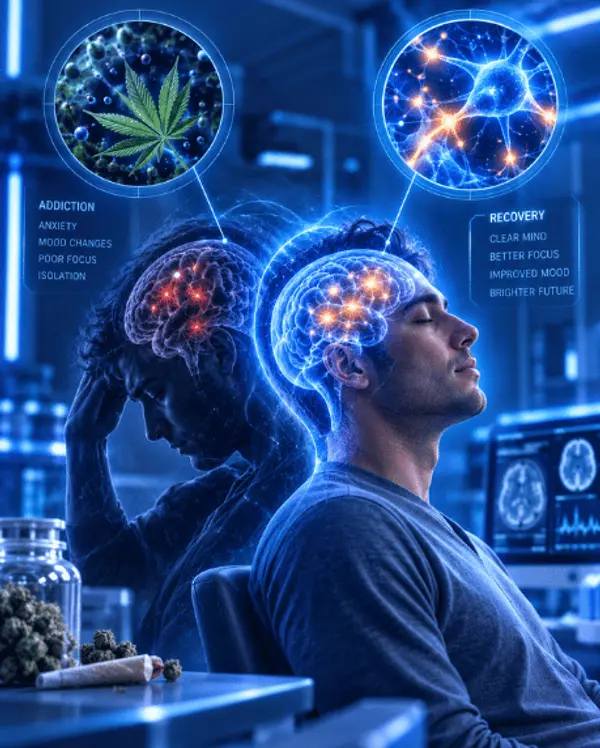
Cannabis Use Disorder
Frequent cannabis use can be associated in some patients with:
Psychological dependence.
Memory problems.
Reduced concentration.
Sleep disturbance.
Anxiety.
Impaired academic or occupational performance.
The treatment plan depends on the severity of use and its impact on daily life.
Polysubstance Use
Polysubstance Use refers to the use of more than one drug or substance.
This can increase the risk of:
Overdose.
Loss of consciousness.
Respiratory depression.
Drug interactions.
More complicated withdrawal.
Psychological and Behavioral Treatment
Detoxification alone is usually not sufficient for long-term addiction recovery.
After medical stabilization, patients may benefit from:
Cognitive Behavioral Therapy – CBT.
Motivational Interviewing.
Psychological counseling.
Family Support.
Relapse Prevention.
Structured rehabilitation programs.
Relapse Prevention
Relapse Prevention is an important part of long-term treatment.
It focuses on identifying:
Triggers.
Psychological stress.
High-risk environments.
Social situations associated with use.
Early signs of relapse.
Relapse After Treatment
Relapse does not automatically mean that previous treatment had no value.
It usually indicates the need to reassess:
Why the patient returned to use.
Current level of substance use.
Psychological factors.
Social environment.
Medication adherence.
Previous rehabilitation plan.
The treatment strategy can then be modified.
Does Every Patient Need Inpatient Detox?
No.
Some patients can be treated on an outpatient basis, while others may require:
Inpatient Detox.
Medical monitoring.
Hospital admission.
Residential rehabilitation.
The decision depends on:
Substance involved.
Level of dependence.
Risk of withdrawal.
Physical health.
Mental health.
Home environment.
Mental Health Assessment in Addiction Treatment
Substance use disorders may coexist with:
Depression.
Anxiety.
Bipolar Disorder.
PTSD.
ADHD.
Other psychiatric conditions.
This is often referred to as Dual Diagnosis, and both conditions should be addressed as part of treatment.
Laboratory Assessment in Addiction Cases
Patients may require:
CBC.
Liver Function Tests.
Kidney Function Tests.
Electrolytes.
Blood Glucose.
Toxicology Screening.
Viral Screening in selected cases.
ECG depending on the substance.
Additional testing based on clinical findings.
Monitoring Liver and Kidney Function
Some substances and medications can affect:
Liver.
Kidneys.
Heart.
Nervous system.
Treatment therefore may require monitoring of organ function rather than focusing only on withdrawal symptoms.
When Is Addiction a Medical Emergency?
Urgent medical care is required for:
Loss of consciousness.
Slow or absent breathing.
Seizures.
Severe agitation.
Severe confusion.
Chest pain.
Suspected overdose.
Suicidal thoughts or self-harm.
Dr. Nabil Abdel Maksoud’s Academic and Professional Experience
Dr. Nabil Abdel Maksoud has an extensive career in Clinical Toxicology and Addiction Medicine.
His professional background includes:
Professor of Clinical Toxicology at the Faculty of Medicine, Cairo University.
More than four decades of experience in toxicology and addiction medicine.
Advanced toxicology training at the University of Kentucky – USA.
Long-standing involvement in medical education and physician training.
Experience in the development of clinical approaches to poisoning and addiction.
Research activity related to toxicology and substance dependence.
Leadership Experience
Dr. Nabil Abdel Maksoud has held senior leadership roles in the medical and academic sectors, including hospital administration and participation in scientific organizations concerned with toxicology, environmental medicine, and addiction treatment.
This leadership background complements his direct clinical experience in complex toxicology and addiction cases.
Why Do Patients Consult Dr. Nabil Abdel Maksoud?
Patients may seek an evaluation with Dr. Nabil Abdel Maksoud for:
Clinical Toxicology – Addiction Medicine – Medical Detox – Withdrawal Management – Drug Dependence – Opioid Dependence – Sedative Dependence – Drug Overdose – Medication Poisoning – Pesticide Poisoning – Chemical Poisoning – Addiction Second Opinion.
Book an Appointment with Dr. Nabil Abdel Maksoud Through Macrocare
If you are searching for:
Dr. Nabil Abdel Maksoud
Nabil Abdel Maksoud Toxicology
Nabil Abdel Maksoud Addiction
Clinical Toxicologist Egypt
Addiction Specialist Egypt
Addiction Medicine Egypt
Medical Detox Egypt
Withdrawal Treatment Egypt
Drug Overdose Specialist Egypt
Poisoning Specialist Egypt
you can submit the case through Macrocare for medical file organization and appointment coordination with Dr. Nabil Abdel Maksoud.
What Should Patients Send for an Addiction Evaluation?
It is useful to provide:
Patient age.
Substance used.
Duration of use.
Average dose or quantity.
Frequency of use.
Time of last use.
Whether more than one substance is used.
Current medications.
Chronic medical conditions.
Previous treatment attempts.
Relapse history.
Previous withdrawal symptoms.
Mental health reports if available.
What Should Patients Send for a Toxicology Evaluation?
Important details include:
Name of the substance or medication.
Approximate dose.
Time of exposure.
Route of exposure.
Current symptoms.
Patient age and weight.
Chronic illnesses.
Other medications.
Emergency department reports or laboratory results if available.
What Should Patients Send After a Drug Overdose?
For medically stable patients after emergency management, useful information includes:
Medication name.
Drug concentration or strength.
Number of tablets or estimated dose.
Time of ingestion.
Symptoms.
Laboratory results.
ECG if performed.
Hospital report.
Treatment already given.
If the overdose is recent and the patient has symptoms, the patient should go to an emergency department immediately rather than wait for remote consultation.
Frequently Asked Questions About Dr. Nabil Abdel Maksoud
What Is Dr. Nabil Abdel Maksoud’s Specialty?
Dr. Nabil Abdel Maksoud specializes in Clinical Toxicology and Addiction Medicine.
Does Dr. Nabil Abdel Maksoud Treat Addiction?
Yes. His practice includes medical assessment of substance dependence, withdrawal management, medical detoxification, and long-term relapse-prevention planning.
Does He Treat Poisoning?
Yes. Clinical Toxicology is one of his principal areas of expertise, including medication and chemical poisoning.
Does He Treat Drug Overdose?
Yes. However, acute overdose associated with reduced consciousness, breathing difficulty, seizures, or other severe symptoms requires immediate emergency treatment.
Can Addiction Be Treated Without Hospital Admission?
Yes, some patients can be treated as outpatients, while others require inpatient detoxification depending on the substance, withdrawal risk, and overall health.
Can a Patient Stop Drugs Suddenly?
Not always. Abrupt discontinuation of some substances can cause medically dangerous withdrawal symptoms.
Is Detox Alone Enough to Treat Addiction?
No. Detoxification is the medical stabilization phase. Long-term treatment may also require psychological therapy, rehabilitation, and relapse-prevention strategies.
Does He Treat Dependence on Prescription Medication?
Yes. Dependence can occur with medications such as opioids, sedatives, and sleeping medications, and may require a structured medical treatment plan.
Can a Relapse Be Reassessed After Previous Treatment?
Yes. The previous treatment program, relapse triggers, current substance use, and medical and psychological condition can be reviewed to develop a revised treatment plan.
Can Patients Request a Second Opinion?
Yes. Medical history, previous addiction treatment, toxicology results, and current substance use can be submitted through Macrocare for assessment coordination.
Can International Patients Be Evaluated Before Traveling to Egypt?
Yes. Medical records and substance-use history can be submitted through Macrocare before travel for case preparation and consultation coordination.
How Can I Book with Dr. Nabil Abdel Maksoud?
Patients can send their medical history, substance or medication details, previous treatment records, laboratory results, and relevant reports to Macrocare, which can coordinate the appropriate consultation with Dr. Nabil Abdel Maksoud.
Konum
Prof. Dr. Nabil Abdel Maksoud ile tedaviler
Bu sağlayıcının sunduğu işlemler, gerçek başlangıç fiyatlarıyla.

Detoksifikasyon Programları

Captagon bağımlılığı

Shadoo Bağımlılığı
Esrar Bağımlılığı
Yalnızca belirtilen fiyatlar — uçuş ve konaklama ayrıca hesaplanır. Nihai maliyet ücretsiz teklifinizde onaylanır. 2026-07-20 tarihli kurlar.