“We Should Transfer Data, Not Just Patients” — Macrocare's CEO Highlights Critical Gaps in International Patient Journeys and Envisions Egypt and Abu Dhabi as Complementary Global Healthcare Destinations.
Dubai, UAE | October 13, 2026
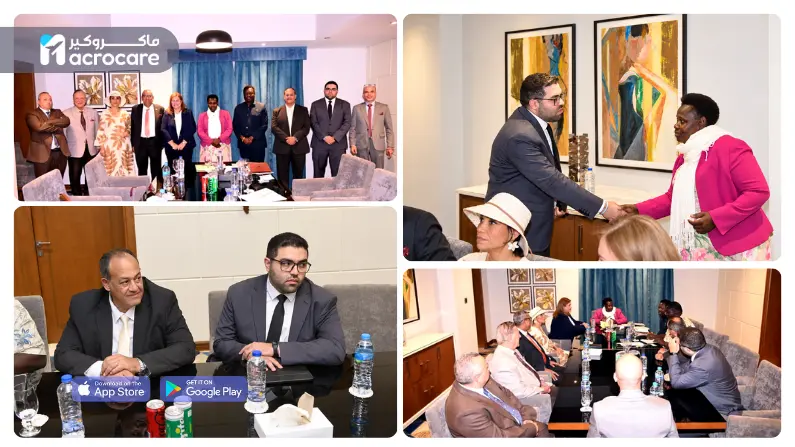
Abdallah Ebid, CEO & Co-Founder of Macrocare, participated as a speaker at the 3rd Edition of Health Tourism & Medical Odyssey (HTMOC 2026), held on October 12–13 in Dubai, UAE, and organized by Agora Group.
Bringing 10 years of experience in healthcare business development, international patient facilitation, and medical tourism, Ebid joined industry leaders for the panel discussion “Ecosystem Partnerships: Providers, Hospitality, Insurers, Airlines & Facilitators.”
Rather than focusing solely on increasing international patient volumes or expanding hospital networks, Ebid addressed a more fundamental issue: the lack of coordination and information exchange between stakeholders involved in international healthcare.
His central message was clear:
“We should transfer data, not just patients.”
The Real Gap in Medical Tourism: Patients Travel, but Information Doesn't
During the discussion, Ebid illustrated the problem through a practical example.
Consider a patient traveling from Nigeria to Egypt or Abu Dhabi for medical treatment.
The patient may have already arranged flights, accommodation, and hospital appointments. Yet important questions may remain unanswered:
What is the recommended treatment? Has the patient's medical condition been adequately evaluated? What will the treatment cost? What outcomes and potential complications should the patient expect?
Ebid explained that, in traditional medical tourism, patients sometimes arrive at their destination before receiving sufficient answers to these questions.
This creates uncertainty for patients and their families and can result in treatment plans that differ from their original expectations.
A patient who has traveled thousands of kilometers may ultimately decide not to proceed with treatment because the proposed medical plan does not match what they understood before departure.
For Ebid, the problem is not necessarily the quality of healthcare at the destination.
It is the failure to connect clinical information, expectations, and decisions before the patient travels.
The Patient Journey Must Begin Before Boarding the Flight
Ebid argued that international patient coordination should begin in the patient's home country, long before travel arrangements are finalized.
In his proposed approach, the patient's medical records would first be reviewed by the receiving healthcare provider.
When appropriate, medical specialists and multidisciplinary teams would evaluate the case and establish a preliminary treatment plan.
The hospital could then communicate the proposed medical pathway, expected costs, anticipated length of stay, and relevant clinical requirements to the patient and the facilitating organization.
Where applicable, insurance companies or other payers would receive the necessary information to evaluate coverage and expected financial commitments.
Airlines and travel partners could also coordinate relevant mobility, accessibility, or medical travel requirements.
All information sharing would need to follow appropriate patient-consent, privacy, and data-protection requirements.
By connecting these stakeholders before departure, the patient could travel with a clearer understanding of what to expect.
The goal is not simply to move a patient from one country to another, but to prepare the entire healthcare journey before the patient arrives.
An Integrated Ecosystem Is More Than a Network of Service Providers
Another important point raised by Ebid concerned the distinction between having multiple service providers and building a genuinely integrated healthcare ecosystem.
Hospitals may offer excellent medical services. Airlines may provide international connectivity. Insurance companies may finance treatment, while hotels and facilitators support the patient's stay and journey.
However, these services often operate separately.
Ebid emphasized that the real opportunity lies in connecting them through coordinated workflows, transparent communication, and shared responsibilities.
The hospital should understand the patient's medical condition before arrival.
The payer should understand the expected treatment and costs.
The facilitator should coordinate the patient's clinical and logistical needs.
And the patient should have access to clear information at every stage.
This model could help reduce avoidable uncertainty, improve admission readiness, and strengthen trust between international patients and healthcare destinations.
For Macrocare, this reflects a broader shift in medical tourism: from connecting patients to providers toward connecting the decisions that shape their treatment journey.
Egypt and Abu Dhabi: Complementary Strengths in a Global Healthcare Market
Beyond the discussion of healthcare ecosystem integration, Ebid was also asked about Egypt's medical tourism sector and how its future compares with Abu Dhabi.
Responding to the question, he expressed strong confidence in Egypt's potential to advance significantly as an international healthcare destination.
Although Egypt was ranked 26th in the 2020–2021 Medical Tourism Index, Ebid argued that its future potential extends beyond its position in that historical ranking.
He highlighted the opportunity for Egypt to become a major healthcare destination serving patients from across the African continent.
Egypt's geographic accessibility, established medical workforce, diverse healthcare services, and existing connections with African markets could support its development as a regional center for international patient care.
At the same time, Ebid recognized Abu Dhabi's investment in advanced healthcare infrastructure, highly specialized medical services, complex surgical procedures, and modern medical technologies.
He envisioned a future in which:
Egypt becomes a leading healthcare gateway for Africa, while Abu Dhabi strengthens its position as a global destination for advanced medicine and complex procedures.
Rather than competing for the same patients in every segment of healthcare, the two destinations could develop complementary roles within a broader regional ecosystem.
Such collaboration could enable more coordinated patient pathways, appropriate referrals, and access to specialized medical expertise across borders.
Ebid expressed his belief that combining the strengths of Egypt and Abu Dhabi could contribute to positioning the Middle East as a globally recognized hub for healthcare and medical treatment.
Redefining the Role of Medical Tourism Facilitators
Ebid's remarks also reflected his experience developing Macrocare as an international healthcare facilitation company.
With 10 years of professional experience in healthcare and medical tourism, his work has involved building relationships with hospitals and medical specialists, facilitating international patient care, and developing partnerships across healthcare markets.
Through this experience, Ebid has emphasized the importance of addressing the uncertainty patients face before choosing a hospital or traveling abroad.
Macrocare's approach focuses on supporting healthcare decisions through medical case assessments, second opinions, treatment options, hospital selection, cost estimates, and admission coordination.
This reflects the belief that medical tourism facilitators should contribute more than bookings and referrals.
They can play a critical role in connecting healthcare providers, organizing relevant medical information, aligning treatment expectations, and supporting continuity of care.
The objective is to create an international healthcare journey in which patients are better informed and stakeholders are better prepared.
A Broader Vision for the Future of Medical Tourism
Ebid's participation at HTMOC 2026 highlighted two interconnected opportunities for the international healthcare industry.
The first is operational: developing stronger integration between hospitals, facilitators, insurers, airlines, and other stakeholders to improve the international patient experience.
The second is regional: encouraging healthcare destinations such as Egypt and Abu Dhabi to build on their complementary capabilities and contribute to a more connected Middle Eastern healthcare market.
Both ideas reflect a shift away from viewing medical tourism purely as the movement of patients between countries.
Instead, they position international healthcare as a coordinated system built around medical information, clinical expertise, informed decisions, and trusted partnerships.
Macrocare extends its appreciation to Agora Group, the conference organizers, fellow speakers, and participating healthcare leaders for the opportunity to exchange perspectives on the future of global medical tourism.
The message from Macrocare's participation was clear:
The future of medical tourism is not simply about transferring more patients. It is about transferring the right information, connecting the right expertise, and making better healthcare decisions before patients ever cross a border.
About Macrocare
Macrocare is an international healthcare facilitation and medical tourism company supporting patients seeking treatment across multiple healthcare destinations.
The company works with healthcare providers and medical specialists to facilitate medical case reviews, second opinions, treatment planning, hospital selection, cost estimation, international patient admissions, and healthcare coordination.
Led by Abdallah Ebid, CEO & Co-Founder, who brings 10 years of professional experience in the healthcare sector, Macrocare aims to build a more integrated, transparent, and patient-centered international healthcare ecosystem.
Website: https://macro.care