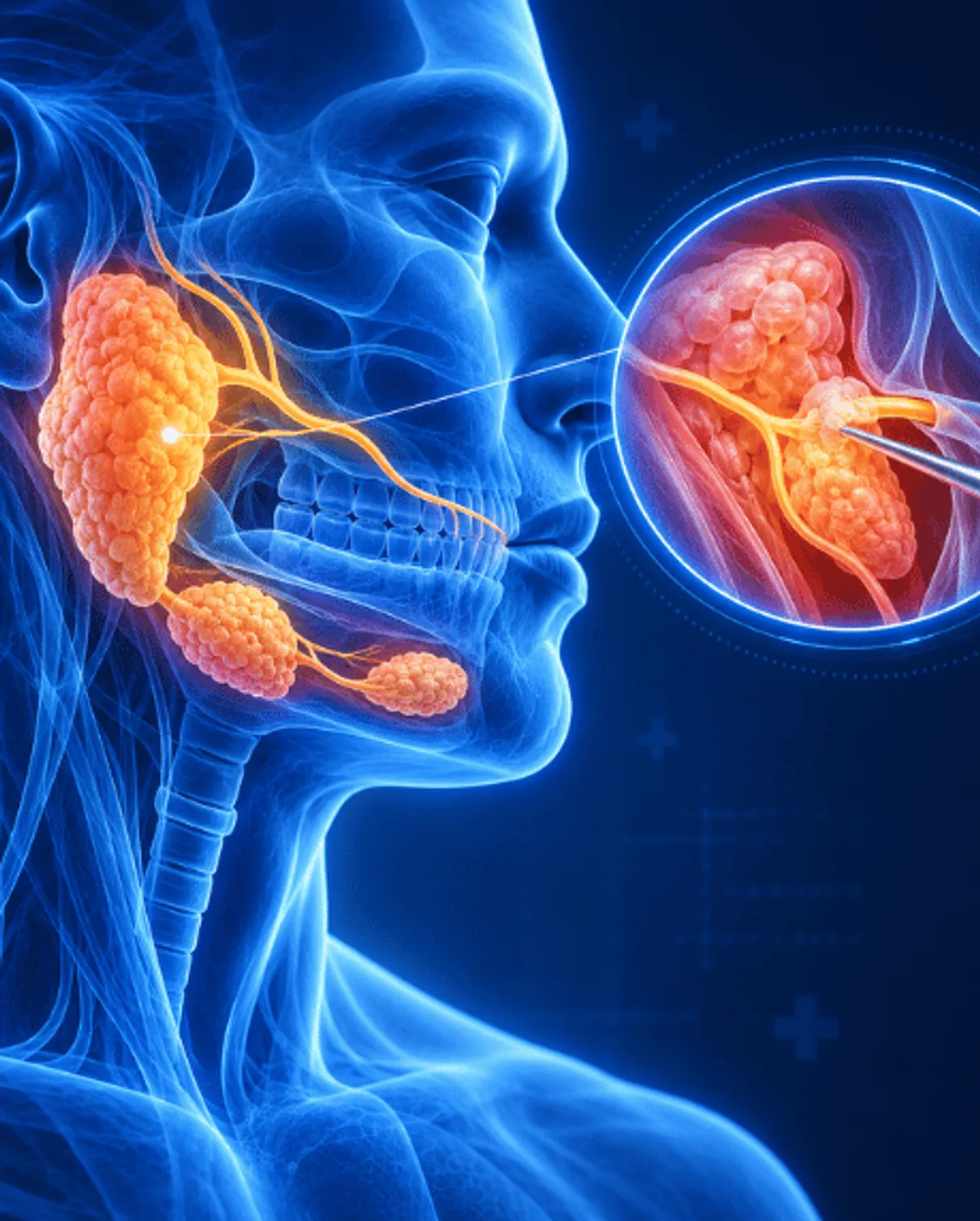
Diagnosis of salivary gland disorders begins with a medical history and physical examination. Depending on the symptoms, the doctor may recommend imaging studies such as ultrasound, CT scans, or MRI. Sialendoscopy may also be used in selected cases to examine the salivary ducts and identify stones or blockages.
Treatment depends on the underlying cause. Some infections may be treated with appropriate medication, while certain small stones and duct blockages may be managed using non-surgical techniques or sialendoscopy.
When surgery is required, Salivary Gland Surgery may involve removing a stone while preserving the gland or performing partial or complete removal of the affected gland. Complete or partial gland removal may be considered in certain cases of tumors or severe, recurrent gland damage.
When a salivary gland tumor is suspected, the doctor may recommend a biopsy or additional diagnostic tests to determine the nature of the tumor and plan the appropriate surgical treatment.
Benefits of Salivary Gland Surgery
Depending on the condition and surgical technique, Salivary Gland Surgery may help to:
Remove salivary stones and duct blockages
Improve saliva flow
Reduce pain and swelling
Reduce recurrent salivary gland infections
Treat certain salivary gland tumors and masses
Preserve the salivary gland in selected minimally invasive procedures
Treat damaged or severely affected gland tissue when necessary
Recovery After Salivary Gland Surgery
Recovery varies depending on the type of surgery, the affected gland, and the surgical technique used. Patients may experience temporary swelling or discomfort around the surgical area. The doctor will provide specific instructions regarding wound care, medications, diet, and follow-up.
During some parotid gland surgeries, particular attention is given to preserving the facial nerve, which runs close to the parotid gland. Temporary changes in facial movement may occur in some cases, while the risks depend on the type of surgery and the underlying condition.
Is Salivary Gland Surgery Suitable for Everyone?
Not every salivary gland condition requires surgery. Treatment depends on the underlying cause, the size and location of any stone or blockage, the nature of a mass or tumor, the condition of the affected gland, and the patient's overall health.
A specialist ENT evaluation is important to determine whether medication, sialendoscopy, stone removal, or salivary gland surgery is the most appropriate treatment option.