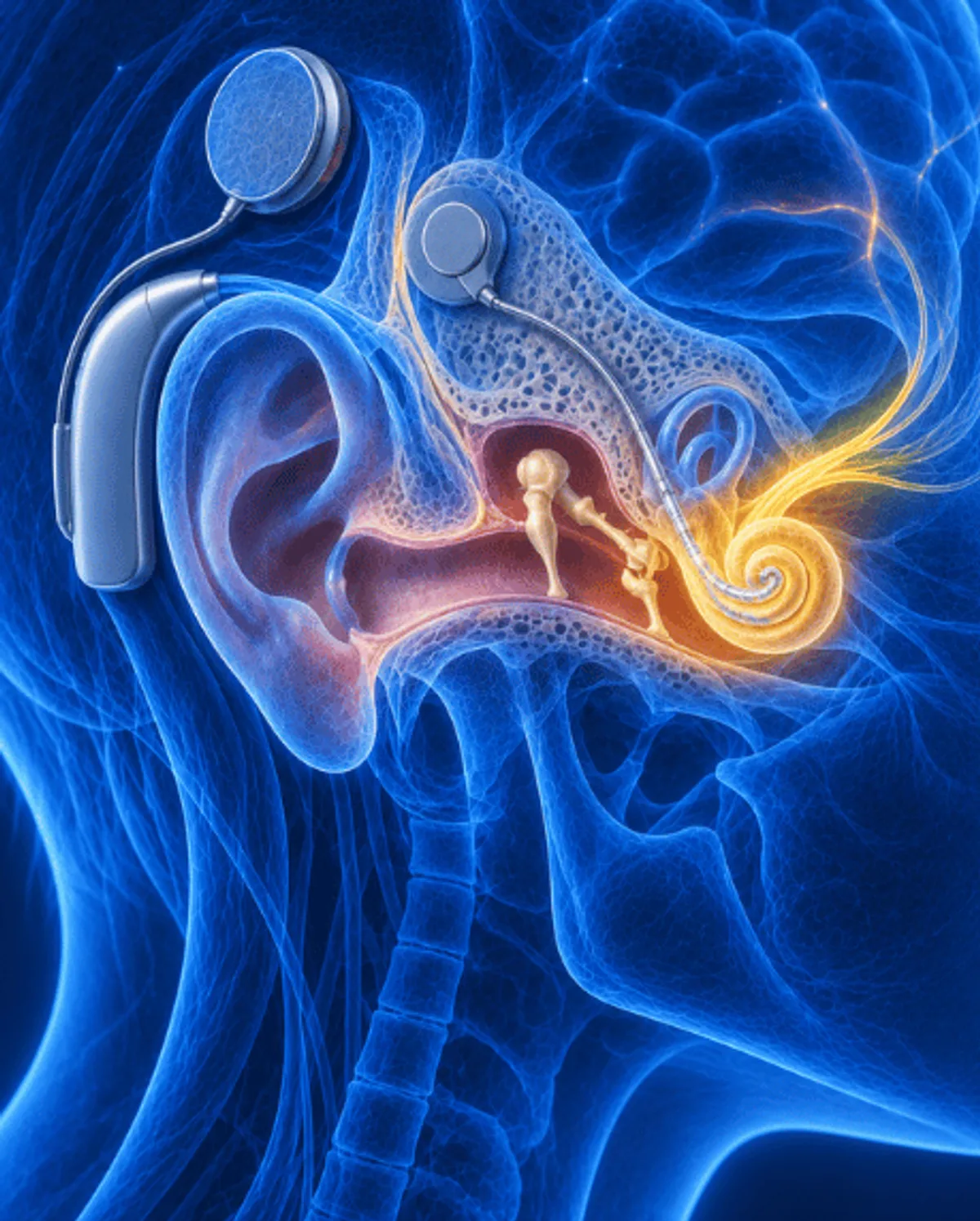
Before Cochlear Implant Surgery, the patient undergoes a comprehensive hearing and medical evaluation to determine whether a cochlear implant is appropriate. Assessment may include:
Detailed hearing tests
Speech perception testing
Hearing-aid benefit assessment
Examination of the ear
Imaging such as CT or MRI when required
Medical evaluation and other tests based on the patient's condition
During surgery, the implant is placed beneath the skin behind the ear, and the electrode array is inserted into the cochlea. The procedure is performed under anesthesia, and the surgical approach depends on the patient's anatomy and the implant system being used.
The external sound processor is generally fitted and activated after the surgical site has healed. Programming and auditory rehabilitation are important parts of treatment, as the brain needs time and training to interpret the electrical signals provided by the implant.
Benefits of Cochlear Implant Surgery
For appropriately selected patients, Cochlear Implant Surgery may:
Improve access to environmental sounds
Improve speech perception
Support communication and listening abilities
Reduce the impact of severe hearing loss on daily activities
Help patients participate more effectively in social and educational settings
Provide an alternative when hearing aids no longer provide sufficient benefit
The degree of hearing improvement varies from person to person and depends on factors such as the cause and duration of hearing loss, age at implantation, auditory nerve function, previous hearing experience, and rehabilitation.
Recovery After Cochlear Implant Surgery
Recovery after Cochlear Implant Surgery usually involves an initial healing period followed by activation and programming of the external sound processor.
Patients may experience temporary discomfort, swelling, or a feeling of pressure around the surgical area. Follow-up appointments are important to monitor healing, adjust the device, and support auditory rehabilitation.
Learning to interpret the new sound signals can take time. Regular rehabilitation and consistent use of the implant can be important for developing listening and speech-perception skills.
Is Cochlear Implant Surgery Suitable for Everyone?
Cochlear Implant Surgery is not suitable for every person with hearing loss. Candidacy depends on the severity and type of hearing loss, the benefit obtained from hearing aids, the condition of the cochlea and auditory nerve, overall health, age, communication history, and other clinical factors.
A specialized cochlear implant team, usually involving an otologist or ENT surgeon, audiologist, and rehabilitation specialists, should perform a comprehensive evaluation before recommending implantation.