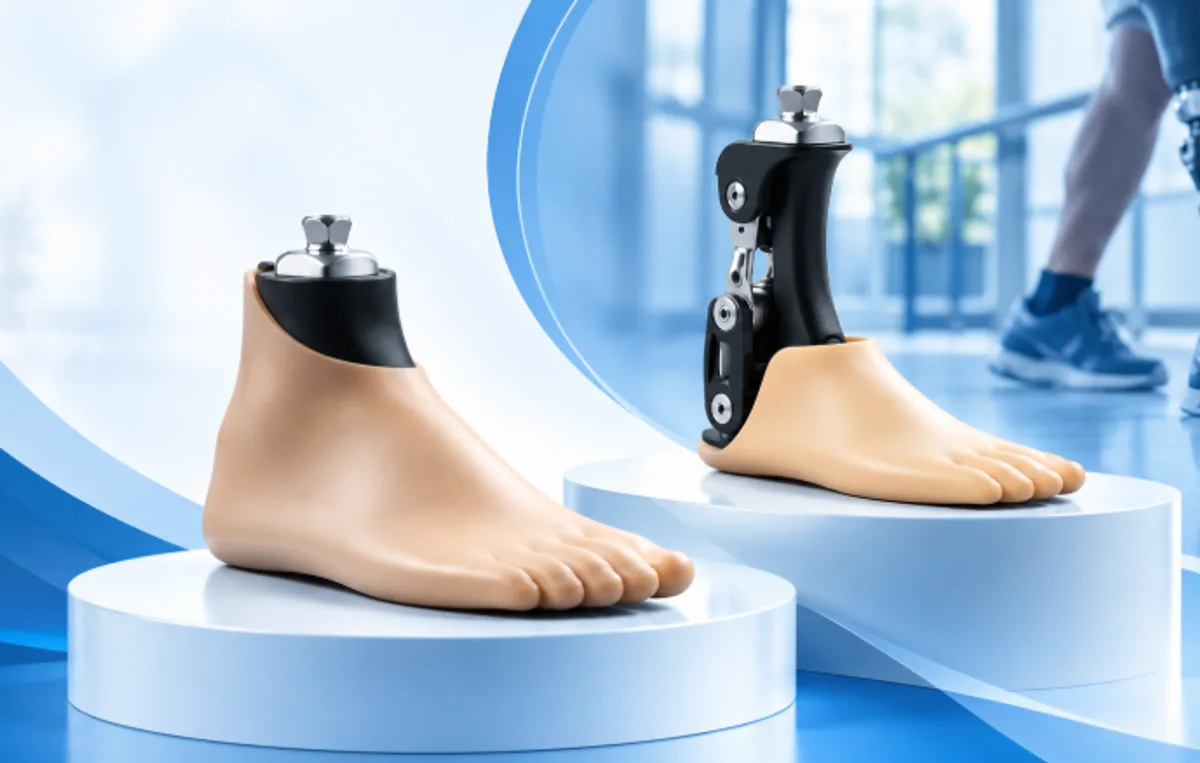
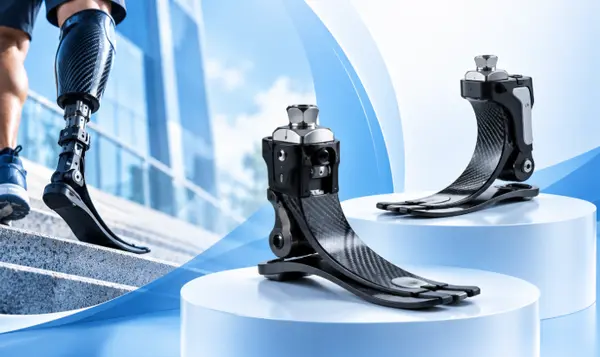
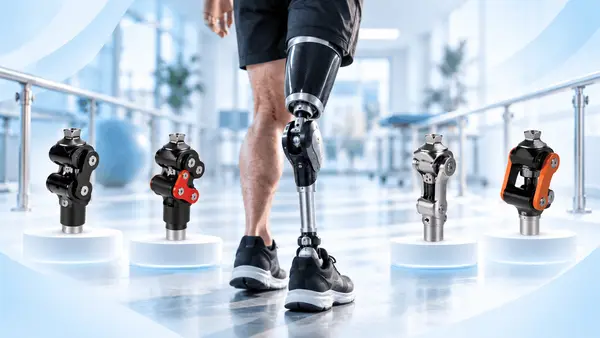
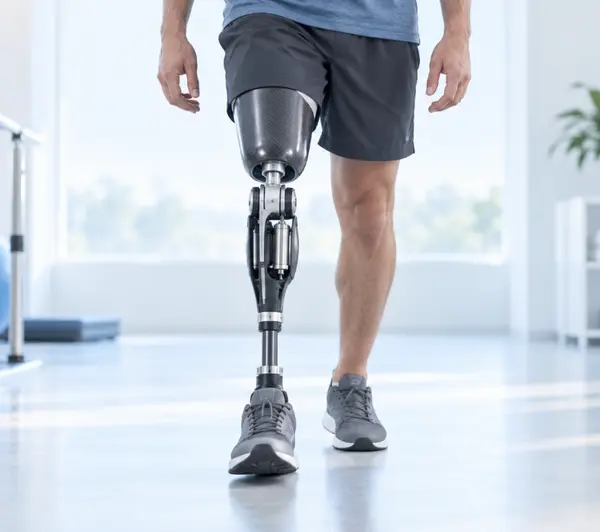
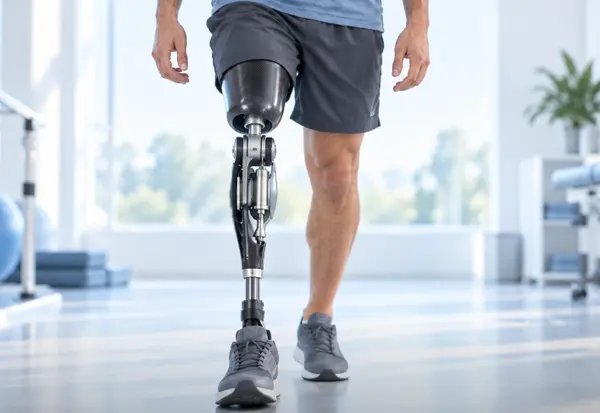
SACH (Solid Ankle Cushioned Heel) and single-axis prosthetic feet are established prosthetic foot technologies designed to restore functional support and improve mobility following lower-limb amputation.
A SACH prosthetic foot does not have a mechanical ankle joint. Instead, it uses a cushioned heel and flexible forefoot structure to provide stability and a controlled transition during walking. Its relatively simple construction makes it a practical option for users who prioritize stability, durability, and predictable everyday mobility.
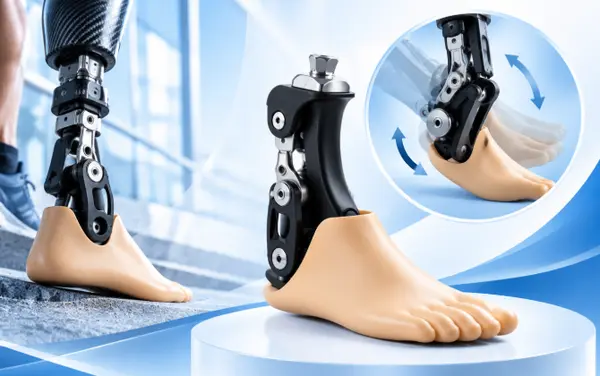
A single-axis prosthetic foot incorporates an ankle mechanism that permits controlled movement around a single axis. Depending on the model, this may provide features such as an adjustable heel shock absorber or adjustable heel height.
The appropriate prosthetic foot is selected according to the patient's mobility level, body weight, amputation level, balance, walking requirements, footwear needs, and rehabilitation goals.
According to the available prosthetic portfolio, SACH and single-axis options are primarily designed for K1–K2 mobility levels. Prosthetic feet Prosthetic feet
Who May Benefit from SACH & Single-Axis Prosthetic Feet?
These prosthetic feet may be considered for people with lower-limb amputation who require:
Stable and predictable everyday walking.
Low to moderate levels of physical activity.
A prosthetic solution suitable for K1 or K2 mobility.
Controlled heel response during initial foot contact.
A durable prosthetic foot for routine daily use.
Additional ankle movement through a single-axis mechanism when appropriate.
A prosthetic configuration selected according to body weight, balance, footwear, and functional requirements.
The supplied portfolio defines K1 as low activity, generally involving gentle steady walking, and K2 as moderate activity, involving everyday walking with greater variability. Prosthetic feet
Assessment & Prosthetic Fitting
Selecting a prosthetic foot should be based on an individualized assessment rather than choosing a component by appearance or technology alone.
The prosthetic team evaluates factors such as:
Amputation Level
The level and characteristics of the lower-limb amputation influence the overall prosthetic configuration.
Mobility Level
The patient's current and expected functional mobility helps determine whether a K1, K2, or more advanced prosthetic foot is appropriate.
Body Weight
Each prosthetic component has defined weight limits that must be considered during selection.
Balance & Walking Ability
Gait pattern, stability, use of walking aids, and ability to negotiate different environments influence component selection.
Residual Limb & Socket
The prosthetic foot functions as part of a complete prosthetic system, so socket fit and alignment remain critical.
Lifestyle & Daily Activities
Home mobility, community walking, work requirements, footwear, bathing requirements, and rehabilitation goals should all be considered.
Following assessment, the prosthetic foot is selected, fitted, aligned, and adjusted as part of the complete lower-limb prosthesis. Rehabilitation and gait training can then help the patient adapt to the prosthesis and improve safe functional mobility.
Available SACH Prosthetic Foot Options
The current portfolio includes several SACH options.
Metiz 1H02AC
A SACH foot with a plastic embedded insert in the forefoot designed to provide elasticity and durability. It is intended for K1/K2 activity levels and patients weighing up to 100 kg. Prosthetic feet
Uniprox F1
A SACH foot with a separated toe and integrated heel bumper. It can be used with a bathing prosthesis and is intended for K1 users weighing up to 100 kg.
Uniprox F20
A dynamic SACH foot featuring a separated toe and integrated heel bumper. It is also suitable for a bathing prosthesis and supports K1/K2 users weighing up to 100 kg.
Available Single-Axis Prosthetic Foot Options
Metiz 1H01A
A single-axis prosthetic foot with an adjustable heel shock absorber and an embedded forefoot insert designed for elasticity and durability. It is intended for K1/K2 users weighing up to 100 kg. Prosthetic feet
Metiz 1H08A
A single-axis prosthetic foot featuring adjustable heel height and an adjustable heel shock absorber of medium stiffness. It is intended for K1/K2 users weighing up to 100 kg. Prosthetic feet
Choosing Between SACH and Single-Axis Feet
The choice should not simply be "which one is better." They address different functional requirements.
A SACH foot emphasizes simplicity, stability, durability, and predictable everyday function.
A single-axis foot adds controlled mechanical ankle movement and may be considered when the patient's gait and functional requirements would benefit from this additional movement.
The final selection should therefore be made after prosthetic assessment and fitting.
Macrocare Prosthetic Care
Macrocare can coordinate the patient's prosthetic journey from initial assessment through component selection, fitting, alignment, and rehabilitation.
Rather than selecting a prosthetic foot based only on a specific brand or model, the objective is to match the complete prosthetic system to the patient's mobility level, body weight, amputation characteristics, lifestyle, and functional goals.