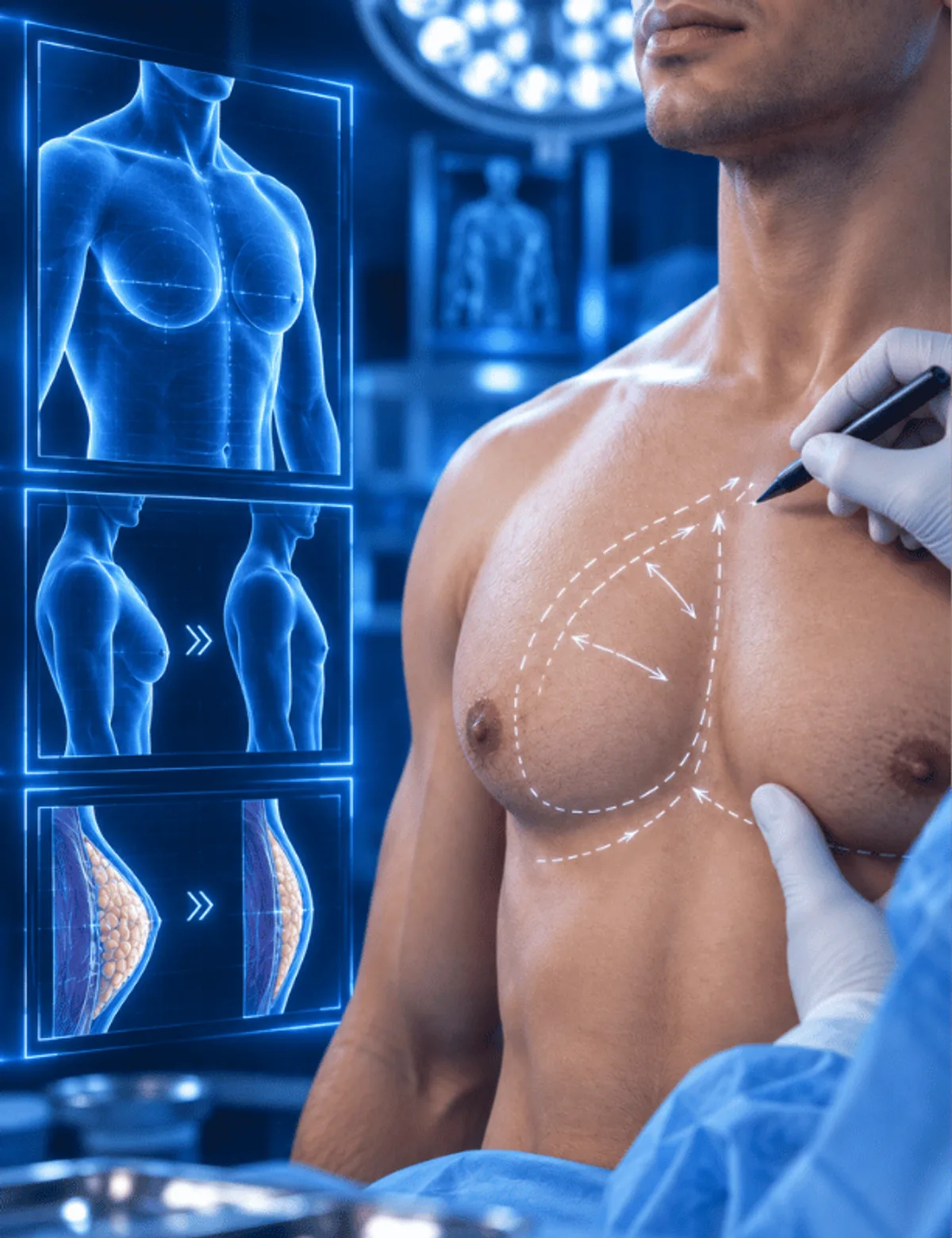
Evaluation usually begins with a medical history and physical examination to determine the nature and extent of breast enlargement.
Depending on the patient's condition, additional tests may include:
Physical examination of the chest and breasts
Hormone tests when indicated
Liver and kidney function tests
Thyroid function tests when appropriate
Breast ultrasound in selected cases
Additional imaging when specific findings require further evaluation
Treatment depends on the underlying cause and severity of gynecomastia and may include:
Liposuction:
Used to remove excess fatty tissue from the chest, particularly when fat contributes significantly to the enlargement.
Glandular Tissue Excision:
Surgical removal of excess glandular breast tissue, particularly when glandular enlargement is the main cause of gynecomastia.
Combined Liposuction and Excision:
Both techniques may be used when the chest contains a combination of excess fat and glandular tissue.
Excess Skin Removal:
In more advanced cases with significant skin laxity, the surgeon may remove excess skin and reshape the chest.
Benefits of Gynecomastia Surgery
Gynecomastia surgery may help:
Reduce the size of enlarged male breasts
Improve chest shape and symmetry
Remove excess glandular or fatty tissue
Improve the appearance of the nipple and areola when necessary
Reduce chest protrusion
Improve comfort when wearing clothing or performing daily activities
Results vary from patient to patient depending on the severity of gynecomastia, skin elasticity, surgical technique, and individual healing.
Recovery After Gynecomastia Surgery
Recovery time varies depending on the extent of surgery and the techniques used. Swelling, bruising, tightness, or temporary discomfort around the chest may occur during the early recovery period.
The surgeon may recommend wearing a compression garment to help reduce swelling and support the chest during healing.
The timing of returning to work and physical activities depends on the type of procedure, the patient's occupation, and the rate of recovery. Following the surgeon's postoperative instructions and attending follow-up appointments are important for monitoring healing and results.
Is Gynecomastia Surgery Suitable for Everyone?
Gynecomastia surgery is not necessary or appropriate for every case, particularly when breast enlargement is caused by an underlying medical condition or medication that can be addressed without surgery.
A comprehensive medical evaluation is recommended before deciding on surgery to identify the cause of gynecomastia and determine whether another treatment approach may be more appropriate.
The decision to undergo surgery depends on:
Severity of gynecomastia
Amount of glandular and fatty tissue
Presence of excess or loose skin
Duration of the condition
Presence of hormonal or medical causes
Overall health
Patient expectations and treatment goals